
The complete guide
Choosing a Top Opening Safe for Everyday Valuables
Small valuables often end up wherever there is room. A passport goes into a desk drawer, a watch stays on the bedside table, and spare cash sits among receipts. That can make things hard to find and leaves no clear place to put them away.
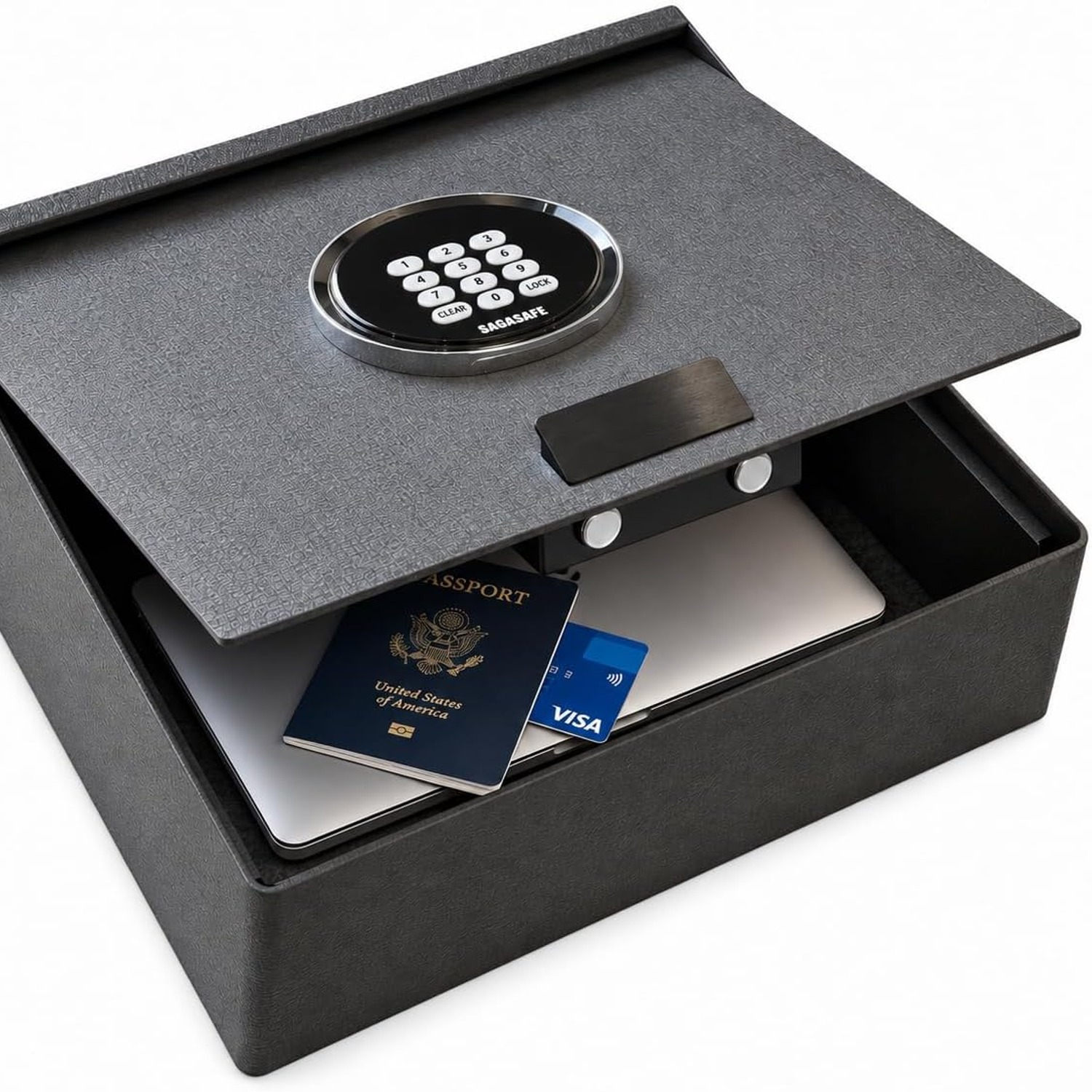
A top opening safe gives those items a shared, lockable home. This model pairs a shallow body with keypad access and a felt-lined interior. Its appeal is practical, but choosing well means looking beyond the lock. Fit, access space and the kind of protection you need all matter.
Why the opening direction matters
A front-opening safe needs room in front of its door. A lift lid safe needs room above it instead. That difference can make a top-opening design useful in a drawer or on a low shelf, provided the lid has space to rise.
It also changes how you reach your belongings. Looking down through the opening may make it easier to see smaller items without reaching into the back of a cabinet.
The important check is not just whether the closed box fits. You must be able to operate the keypad and open the lid in its intended location. A shelf directly overhead or a drawer that only opens partway could make an otherwise suitable space awkward to use.
Measure the whole setup before ordering
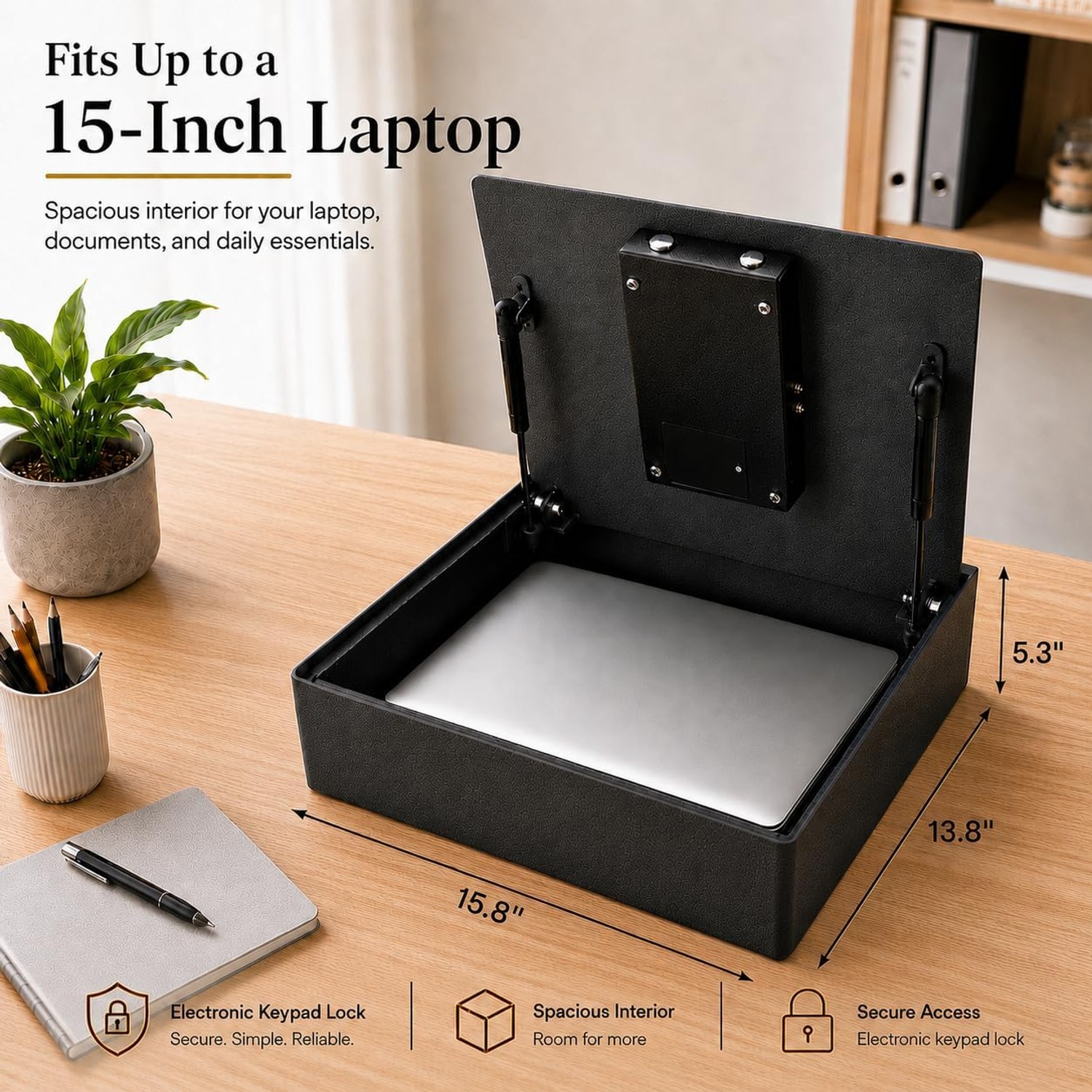
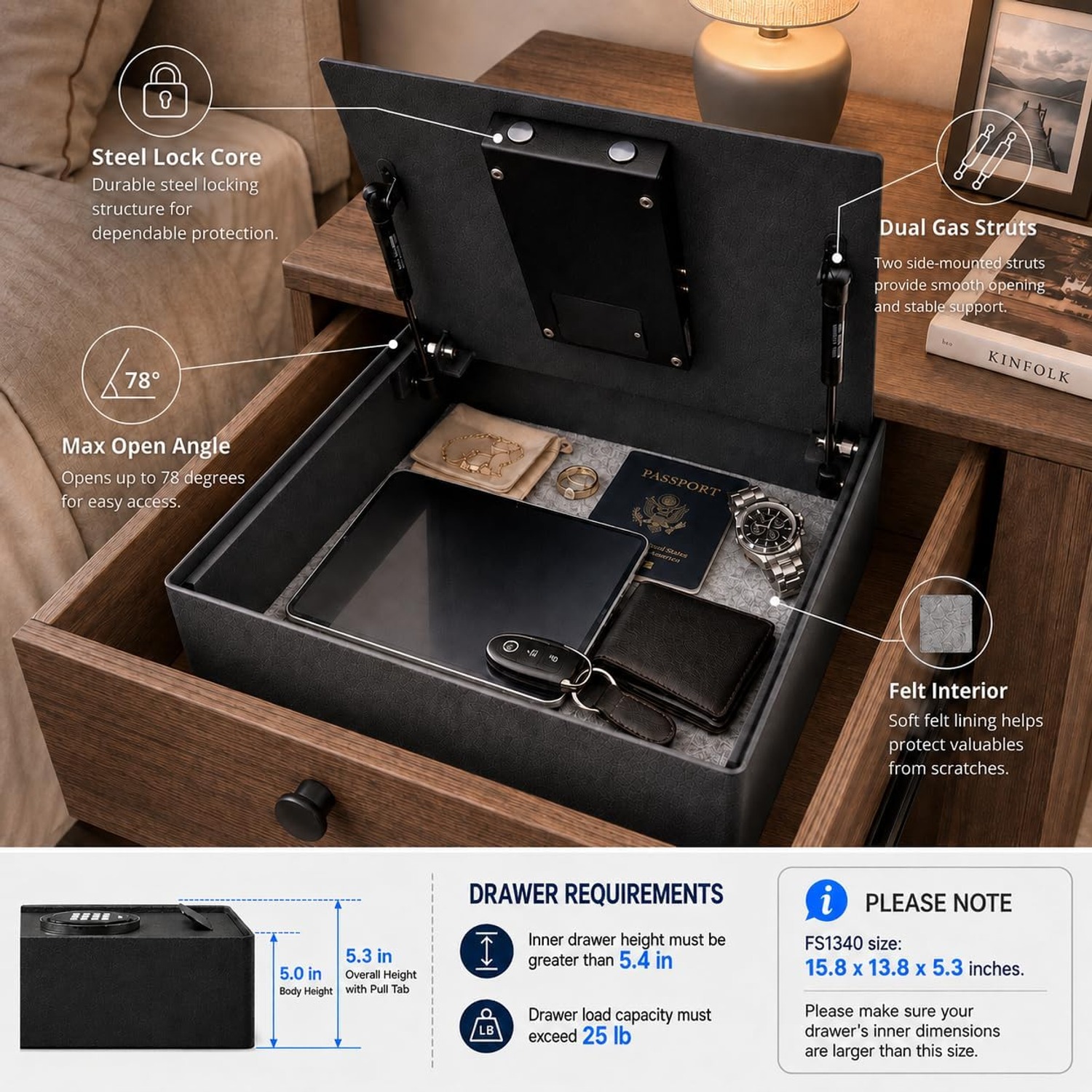
The stated overall measurements are 15.8 inches wide, 13.8 inches deep and 5.3 inches high, including the handle. The body itself is listed as 5.0 inches high. Use the larger overall height when checking a tight space.
Measure the narrowest points in your furniture. Drawer sides, runners, hinges and raised edges can reduce the space available. Then consider the route into the room or cabinet, not just the final resting place.
A simple paper outline of the footprint can help you picture the size. It will not show lid movement, but it can reveal how much useful desk or drawer space the safe will occupy. Leave access to the keyhole and emergency power connection in your plan as well.
Check that the furniture can carry it
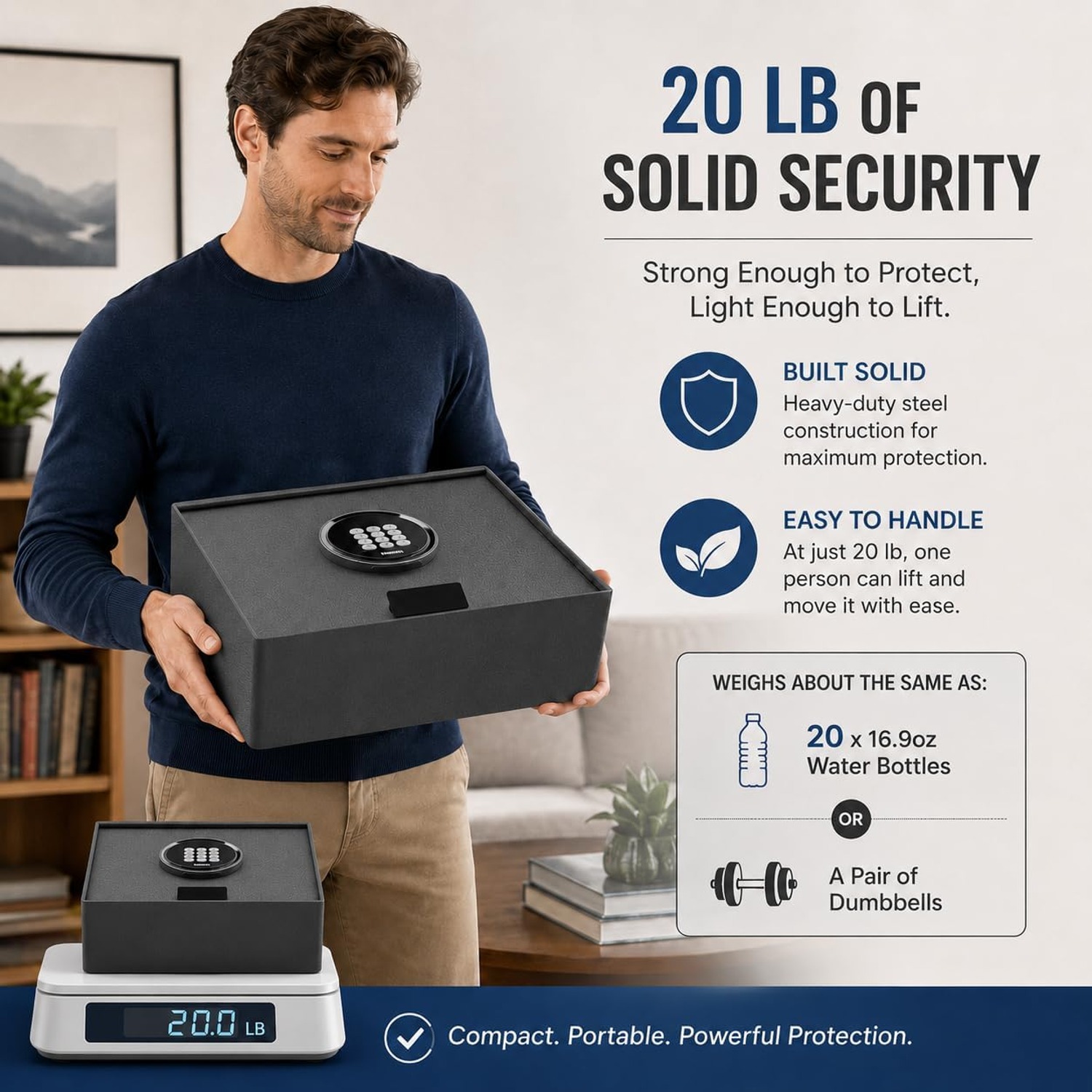
This safe weighs 8.62 kg before you add anything. That matters more in a sliding drawer than it might on a sturdy floor.
Look for a stated load limit for the furniture. Include the weight of the contents when comparing it with that limit. If the rating is unknown, do not assume that a drawer is strong enough simply because the safe fits inside.
The mounting type is listed as freestanding. Although two screws are included, the maker's description does not explain fixing points or approved anchoring methods. Read the manual before making an installation plan. Included hardware alone does not confirm that a particular desk or cabinet is suitable for fixing.
Understand the everyday access options
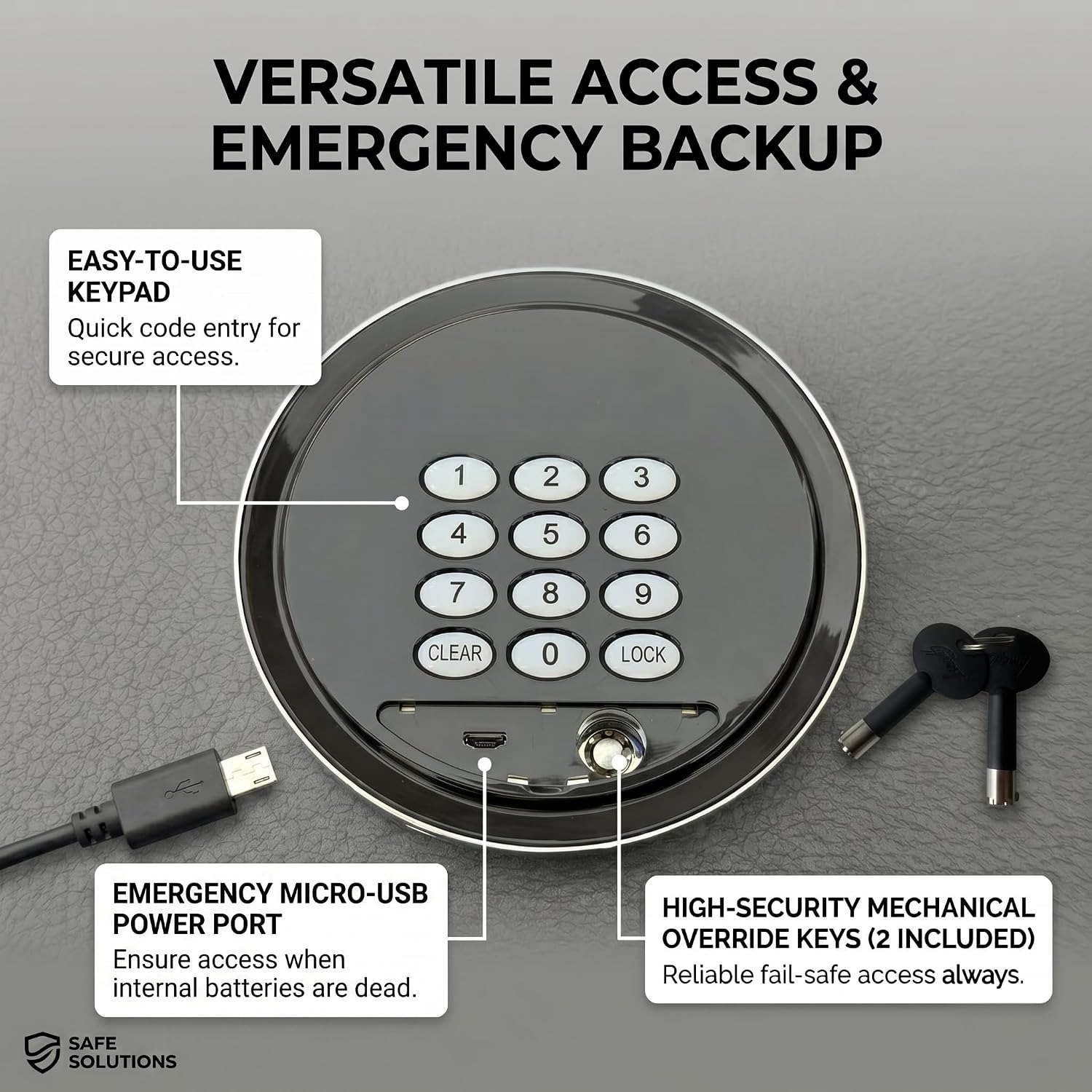
The electronic combination lock uses a personalized code of 4–6 digits. That lets you open the safe without reaching for a key each time.
Before adding belongings, follow the setup instructions and practice the opening sequence. Make sure you understand how to change the code and how to confirm that the lid is locked. Choose a code that is not easy for someone nearby to guess.
Password-concealment mode is also listed. It is intended to help limit what nearby viewers see during entry, but the exact steps are not given by the maker by the maker. Read the manual rather than assuming it works like a keypad you have used before.
Four consecutive incorrect attempts cause a 15-minute keypad lockout. That is worth knowing before anyone else in the household tries to use it.
Plan for a flat battery before it happens
A digital keypad safe needs a backup access plan. This model includes two keys, plus a Micro-USB cable for emergency power.
The emergency port can receive external power to activate the keypad when the batteries are depleted. It is not described as a charging port, and no battery-charging function is stated. Keep that distinction in mind when reading the setup instructions.
Store the backup keys outside the safe, in a secure place you can still reach. Putting both keys inside would defeat their purpose. The cable should also be accessible when needed.
AA batteries are specified, but the quantity and whether they are supplied are not stated. Check the manual before buying batteries or setting up the safe.
Match the contents to the usable space
The listed capacity is 0.5 cubic feet. That gives a broad idea of storage volume, but it does not tell you the largest flat item that can sit inside.
Passports, wallets, watches, jewelry, cash and documents are among the suggested contents. Think about what you will actually store together. A stack of papers may fit differently once it is inside a folder, and a watch box takes more room than the watch alone.
The felt-lined interior helps reduce surface scratches. It does not stop loose pieces from rubbing against one another. Small pouches or separate cases may help organize delicate items, but remember to include their size when judging capacity.
Avoid packing the safe so tightly that belongings press against the lid or interfere with closing.
Treat laptop fit as a separate check
This model is listed for a 15-inch laptop. That is useful guidance, but laptop screen size does not define the outside dimensions of the device.
Two laptops with the same screen measurement may have different widths, depths and thicknesses. A protective sleeve adds more bulk, as can a charger placed alongside it.
Exact internal dimensions are not provided by the maker. If laptop storage is your main reason for buying, confirm the usable measurements before ordering. Do not use the external footprint as a substitute for interior space.
The same advice applies to rigid document folders and larger cases. For a laptop safe, actual device fit matters more than a broad size label.
Be clear about protection limits
A lockable box and a rated protective safe are not automatically the same thing. This product lists alloy steel construction, but it does not state steel thickness, a burglary rating or a security certification.
The maker gives no fire rating either. You should not assume that it will protect paper, cash or electronics during a fire. If that is the main risk you want to address, look for a product with a stated rating that meets your needs.
This safe is explicitly listed as not water resistant. Positioning it near plumbing, on a damp floor or where drinks are often placed would add avoidable risk.
It also has no alarm. The keypad lockout restricts code attempts, but it is not an audible warning system. These distinctions help you choose based on what is documented rather than what the word “safe” might suggest.
Decide who it suits
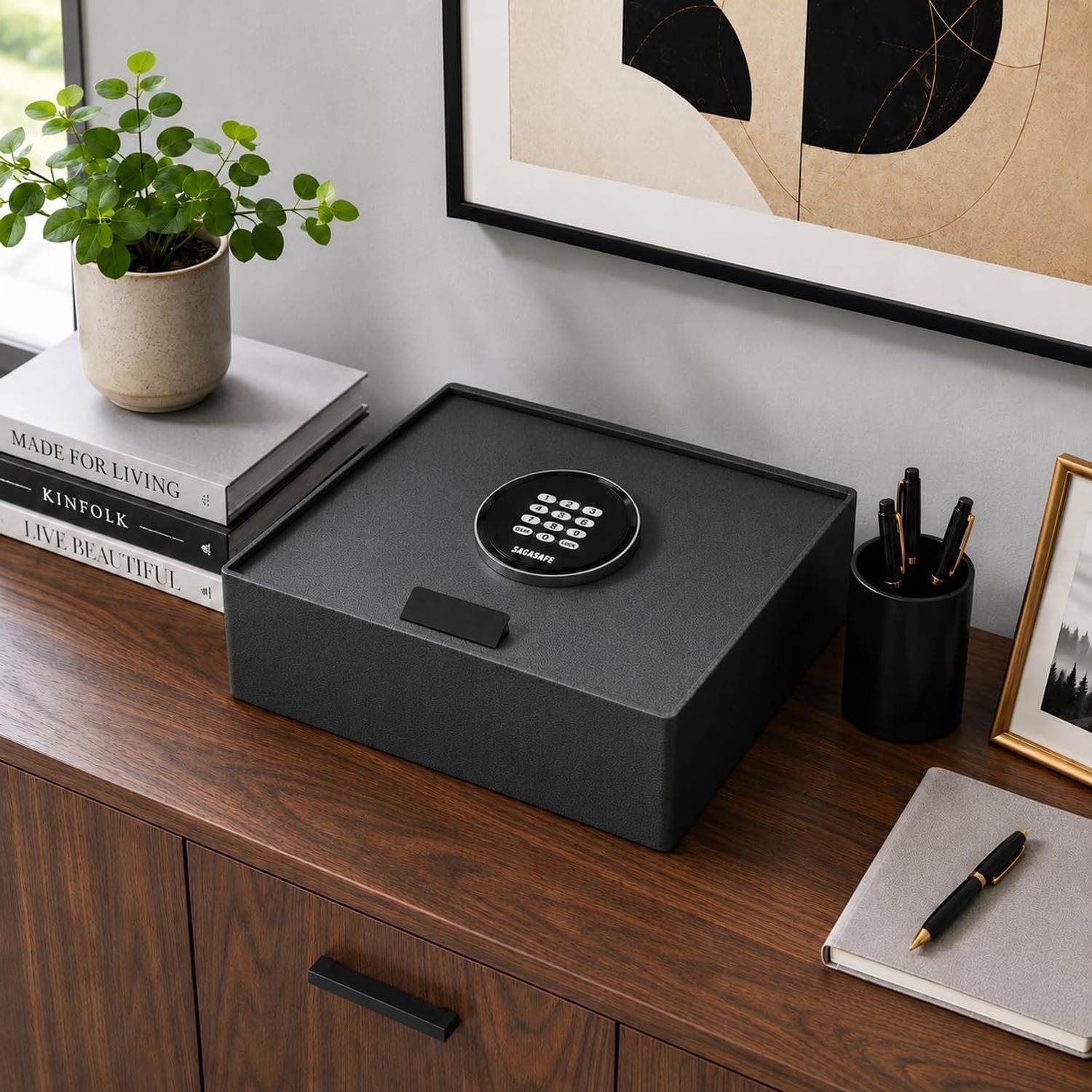
A home office safe like this may suit someone who wants a defined place for everyday valuables with access from above. The shallow shape is worth considering where a taller box would be awkward.
A nightstand safe setup may also work, but only after checking furniture strength and lid clearance. Think about how you will use it when the room is busy or poorly lit. A location that is difficult to reach can discourage regular use.
For gifting, practical checks still come first. Make sure the recipient has enough space and wants keypad-controlled storage. Let them choose their own code and decide where to keep the backup keys.
If you need certified protection or have insurance requirements, get those requirements in writing before choosing.
Keep care simple and consistent
Use a soft, dry cloth for routine cleaning. Keep moisture away from the keypad, keyhole and Micro-USB port, and avoid letting dust build up around those areas.
Keep the interior tidy enough that you can see what is inside. Check that nothing catches under the lid when closing it. Felt lining is helpful for surface contact, but it does not replace careful packing.
Follow the supplied manual for battery changes and lock setup. Keeping the instructions somewhere outside the safe can make later checks easier, especially if you need emergency access.
Check delivery and return details
Free delivery is stated for orders within the United States. The maker gives no delivery timeframe here, so use the estimate shown at checkout when planning around travel or a gift date.
Read the return policy before ordering. The maker does not state a return window or who pays return shipping. Measuring first is especially useful with a heavy item, since discovering a fit problem after arrival can be inconvenient.
The short version
Choose this top opening safe for its access layout, keypad operation and felt-lined storage, not for protection ratings that are not stated.
Measure the location, confirm furniture strength and check the size of your intended contents. Keep backup access available and use a dry setting. If those points match your needs, this low-profile design offers a clear place to keep everyday valuables together.