

The complete guide
Choosing a Hard Shell Document Case for Your Important Papers
Give important papers a place you can remember
A missing document often becomes a problem at the worst time. You need a passport before a trip, a certificate for an application or a policy number during a phone call. Knowing that it is somewhere in a drawer does not help much.
A document case gives those papers a shared home. Instead of searching several places, you can start with one organized collection. The aim is simple: put things away in a way that makes them easier to find later.
This hard shell file organizer brings together accordion pockets, small-item sections and a mechanical code lock. It is worth considering if loose envelopes and mixed stacks have become hard to manage. Before buying, look closely at fit, storage layout and the limits of the protection information supplied.
Start with organization, then consider protection
There are two different reasons people shop for important document storage. One is to keep papers sorted. The other is to protect them from hazards such as fire, water or theft.
Do not assume that a product which meets the first need also meets every part of the second. A divided case can help you keep track of records, while a tested safe may be needed for a particular protection requirement.
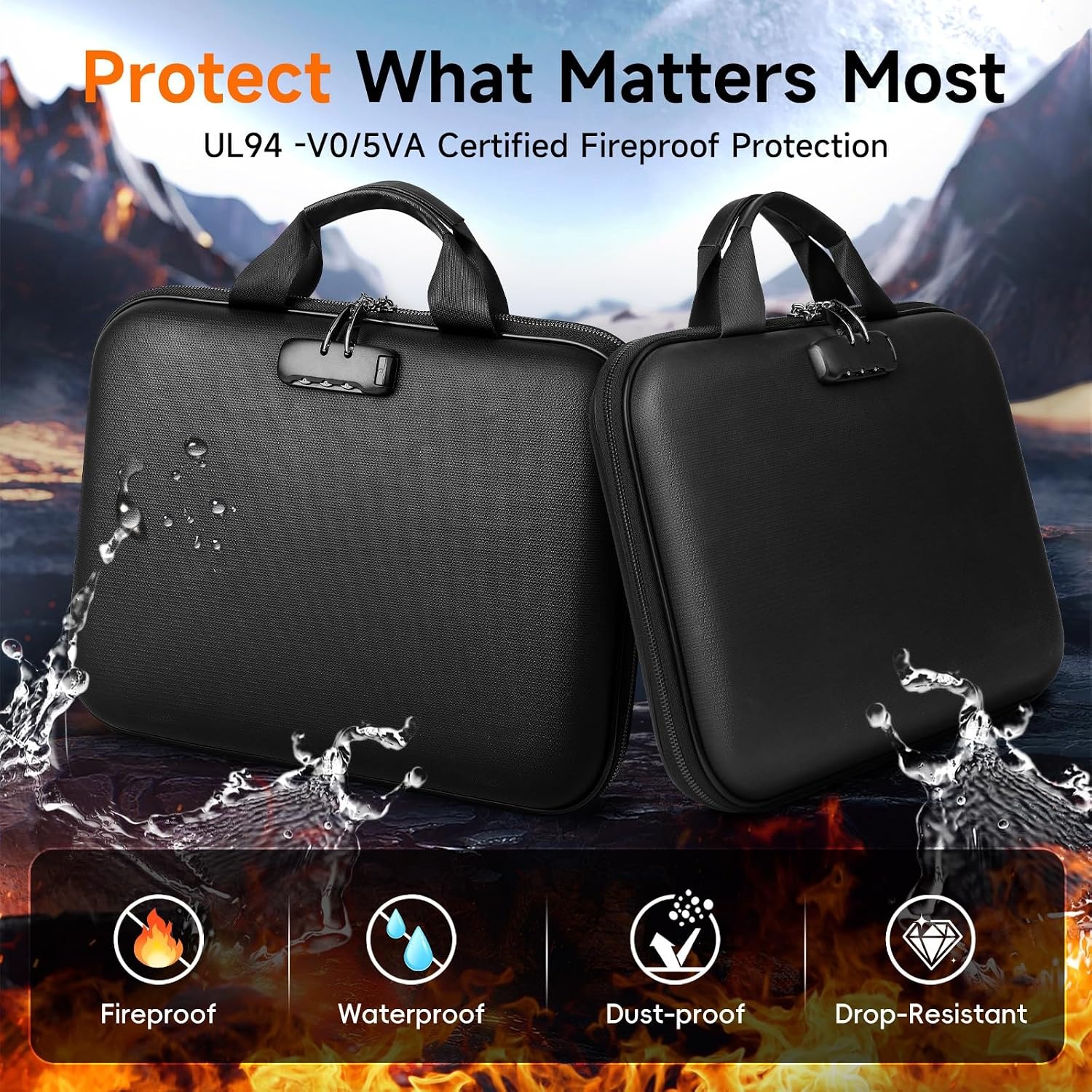
This product is sold as a Fireproof Document Case. However, the maker does not state a document protection temperature and duration. It also does not establish burglary resistance. Treat those missing details as part of the buying decision, rather than filling the gaps with assumptions.
For everyday use, focus first on whether its layout solves your filing problem. For higher-risk storage, ask for the relevant test documentation before deciding.
How the internal storage helps
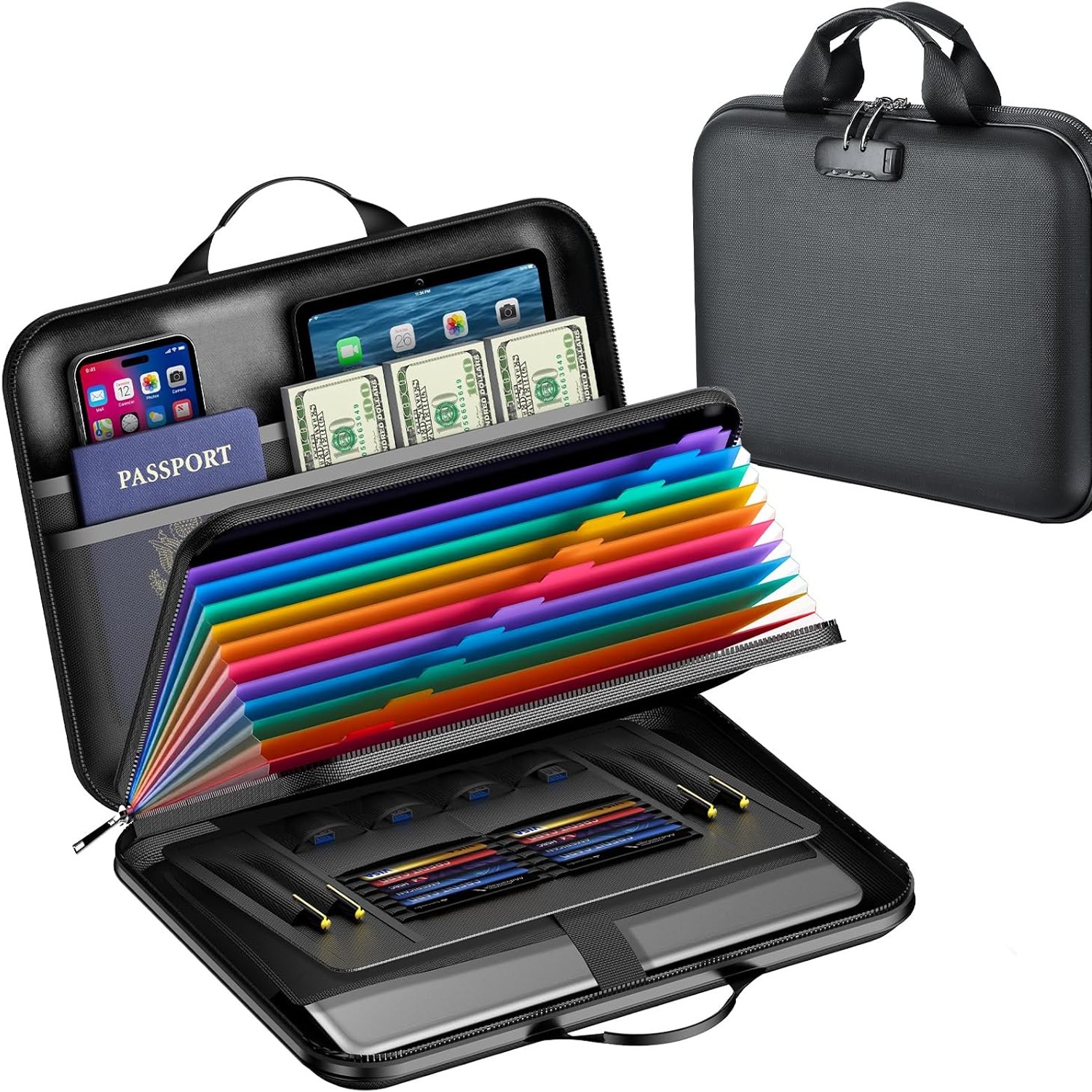
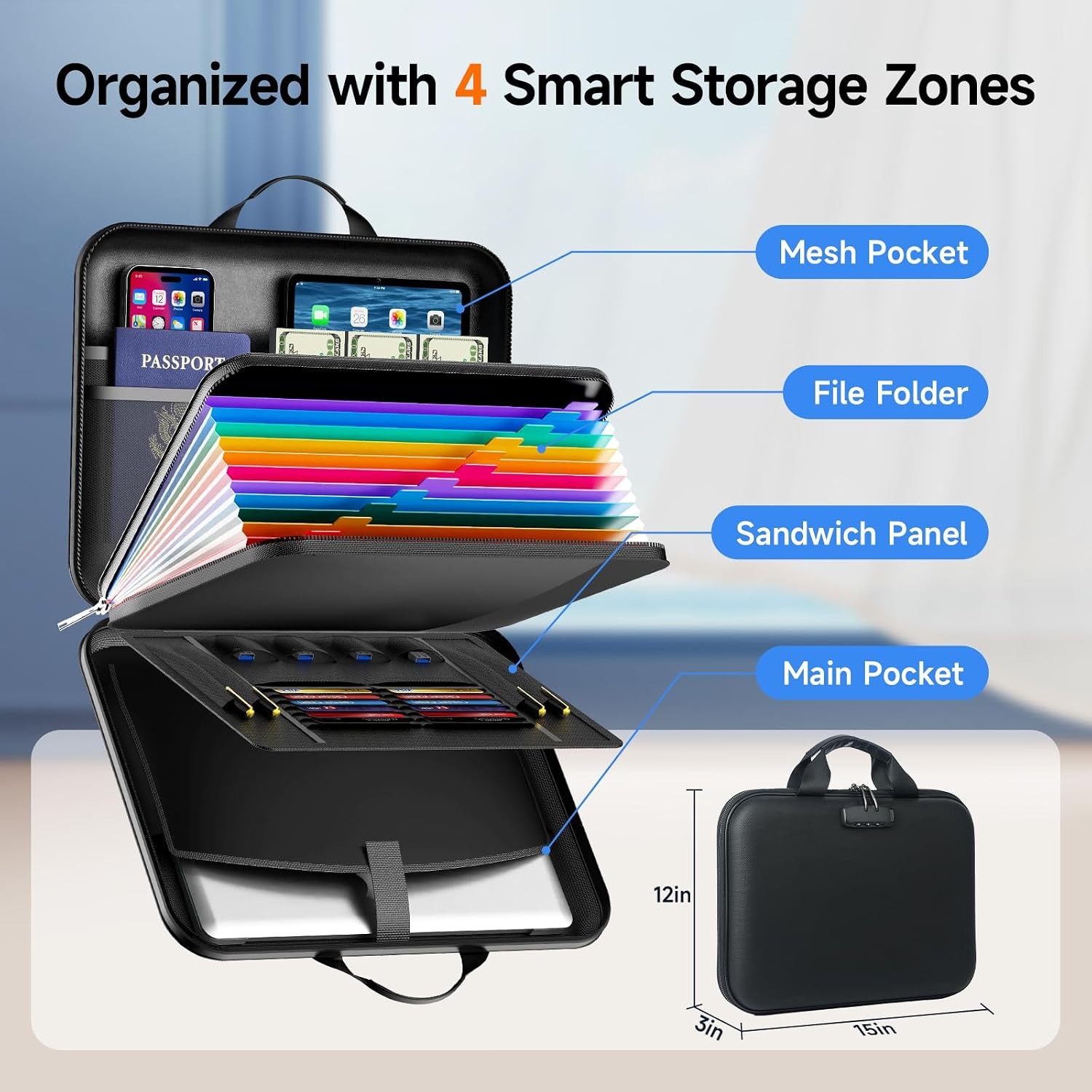
The case uses an accordion layout to separate papers. The maker describes 13 labeled accordion pockets, along with a zipper pocket and a larger main section.
Smaller storage areas include pen slots, card slots, passport holders and mesh bags. These can help prevent small items from getting mixed into a stack of full-size documents.
A practical approach is to give each area a clear job. Keep current forms together, place travel papers in another section and reserve a space for records you rarely use. There is no need to fill every pocket at once.
The product details list 42 compartments, although the description does not explain how the individual sections are counted. Think about the kinds of storage offered rather than using that number alone to judge capacity.
Check document fit before ordering
The listed overall dimensions are 15.5 x 11.5 x 3 inches. The description also states that the depth can expand to 4 inches.
Those measurements tell you the outside size, not the usable size of each pocket. The shell, dividers and closure all take up space. A folder with tabs may need more room than the loose papers it holds.
Measure the largest item you plan to store. Include its sleeve, envelope or binder edge. If keeping a certificate flat is essential, confirm the internal space rather than assuming that an outside measurement guarantees a fit.
The same care applies to electronics. Although the maker mentions laptops, no device size limit or padded storage specification is provided. A portable document case should not be chosen as a laptop protector without clearer fit and protection details.
Decide whether the lock meets your needs
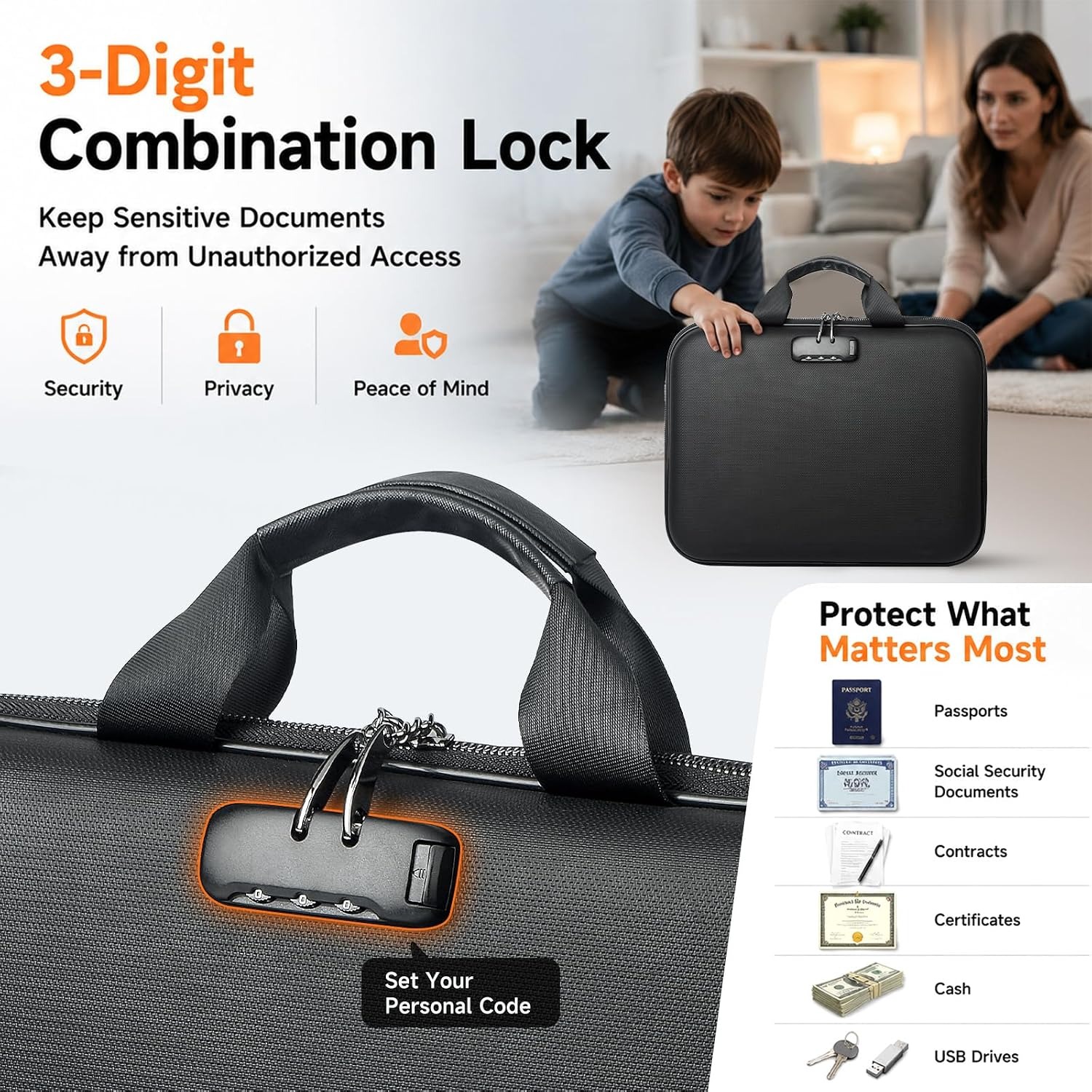
This document box with combination lock uses a mechanical three-digit code. It offers a way to close the case without keeping track of a separate key.
Read the supplied instructions before changing the code. Test your chosen combination while the case is empty, and make sure you understand how the lock closes and releases.
Keep a secure record of the code somewhere separate from the case. Avoid making the case your only source of access to essential information.
A code lock is not the same as a burglary rating. No tested resistance to forced entry is given by the maker. If you are storing high-value items or need to meet an insurance requirement, look for a safe with the relevant documented performance.
Read fire and water descriptions carefully
Words such as fireproof and waterproof need context. Useful protection information explains what was tested, under which conditions and for how long.
For paper storage, a material-related claim does not by itself tell you what temperature the contents might reach during a fire. The maker does not provide a document protection temperature and duration, so no survival promise can be made for the papers inside.
The product details also list waterproof performance, but no immersion depth or duration is supplied. Do not plan to leave the case in standing water or assume that it can withstand flooding.
These limits do not change the case's role as an organizer. They do mean that buyers seeking tested emergency protection should request more information or compare products with clear ratings for that purpose.
Who this case may suit
A family document organizer can be useful when several people share responsibility for household paperwork. A common system makes it easier to return records to the same place after use.
For a home office, the divided sections offer a way to separate active paperwork from longer-term files. Check any workplace rules before storing client details or other confidential records in a portable container.
The passport holders may also appeal to people preparing for travel. Keeping related papers together can reduce last-minute searching, but the case is not a replacement for checking that every required document is current.
It may be less suitable if you need to store thick binders, require a confirmed internal size or want certified security performance. Those needs call for more specific information than the maker provides.
Build a filing system you will maintain
The most useful home paperwork organizer is one you can keep using when life gets busy. Start with a few clear categories rather than a detailed system that takes too much effort.
Sort the papers before loading the case. Remove duplicates where appropriate, separate items needing action and check which originals you must retain. Follow any legal or professional guidance that applies to your records.
Choose labels that make sense to everyone who will use the case. A broad household category may work better than several nearly empty pockets with similar names.
Leave some room for new papers. A tightly packed accordion document organizer can become awkward to search, and overfilling may put pressure on the closure. Review the contents now and then so outdated paperwork does not crowd out current records.
Think about carrying and placement
The recorded empty weight is 0.91 kg. The maker describes a reinforced handle and a non-slip base.
Paper adds weight quickly, so judge portability with your likely contents in mind. Someone moving the case between rooms has different needs from someone planning to carry it regularly during travel.
Choose a stable storage spot that is easy for authorised users to reach. Avoid damp areas and places where the case could be knocked down. Do not rely on the non-slip base to secure it on an uneven surface.
For a shared household, make sure the right people know where the case is kept. A filing system is less useful if only one person knows how to find it or open it.
Care for the case and its contents
Use a soft cloth for routine cleaning and let the case dry before returning papers. Avoid soaking it or using harsh cleaners unless the supplied care instructions allow them.
Keep loose scraps and dust away from the lock and closure. If the lid will not close easily, check the contents rather than forcing it.
The material information needs care too. Product details list aluminum, while descriptive copy mentions silicone-coated fiberglass. The full construction is not clearly established in the maker's description. Confirm it before using a material-specific cleaner or making a purchase based on one material alone.
It is also sensible to keep secure copies of key information where appropriate. A single storage case should not be your only plan for recovering essential records.
The short version
This hard shell document box combines divided file storage, smaller pockets and a mechanical code lock. Its listed size and handle make it worth considering for a collection of household or office papers.
Measure your documents, allow room for folders and check the current delivery and return terms before ordering. If tested fire, water or theft protection is your main priority, ask for documentation that addresses that need.
Choose it for a storage layout that fits your routine, not for protection figures that have not been supplied.