
The complete guide
Choosing a Locking Cash Box for Everyday Cash Handling
Loose change has a way of spreading across a table. Bills get mixed with receipts, checks sit under papers, and a simple count takes longer than it should. A dedicated cash box gives those items a regular home. It also lets you close and lock the contents between uses.
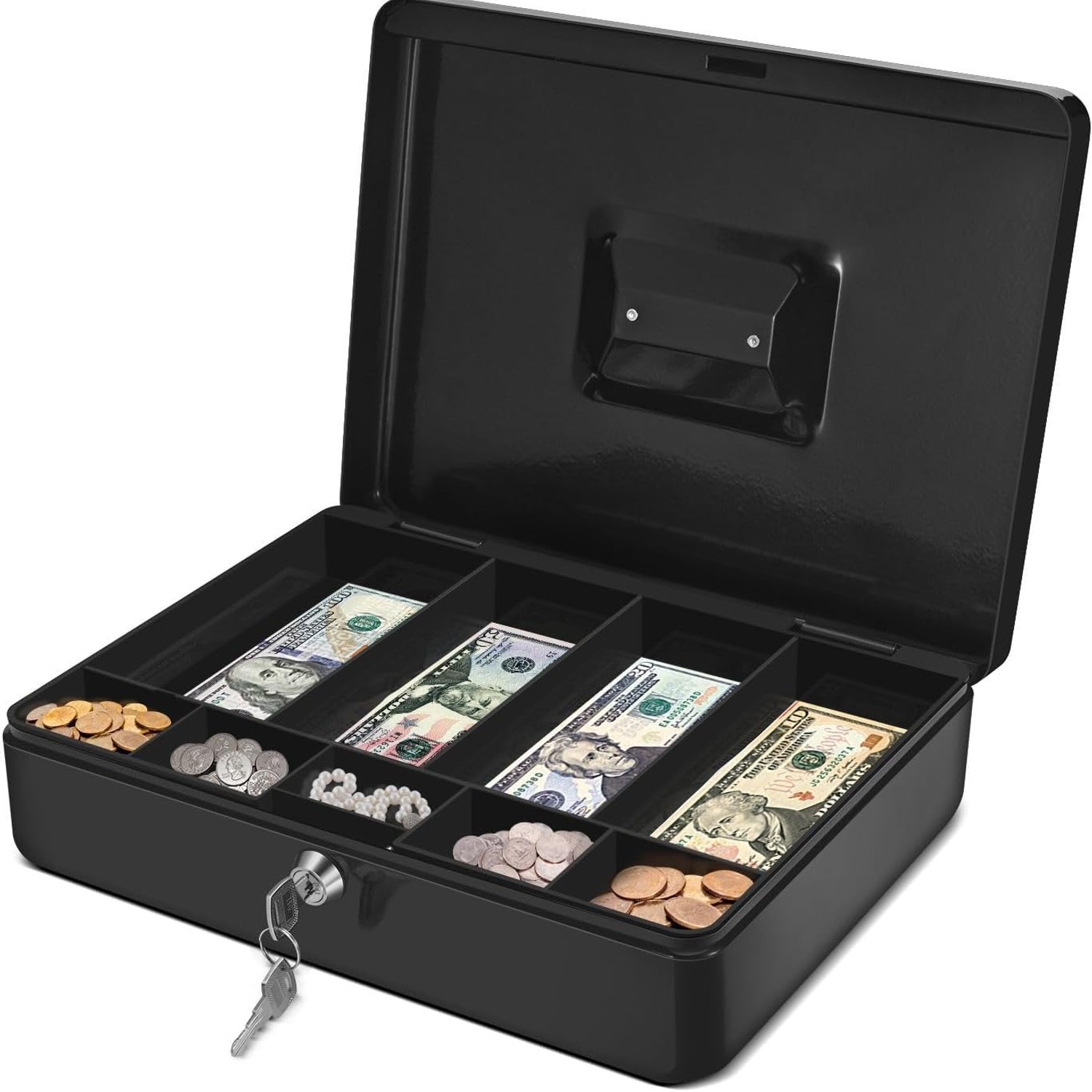
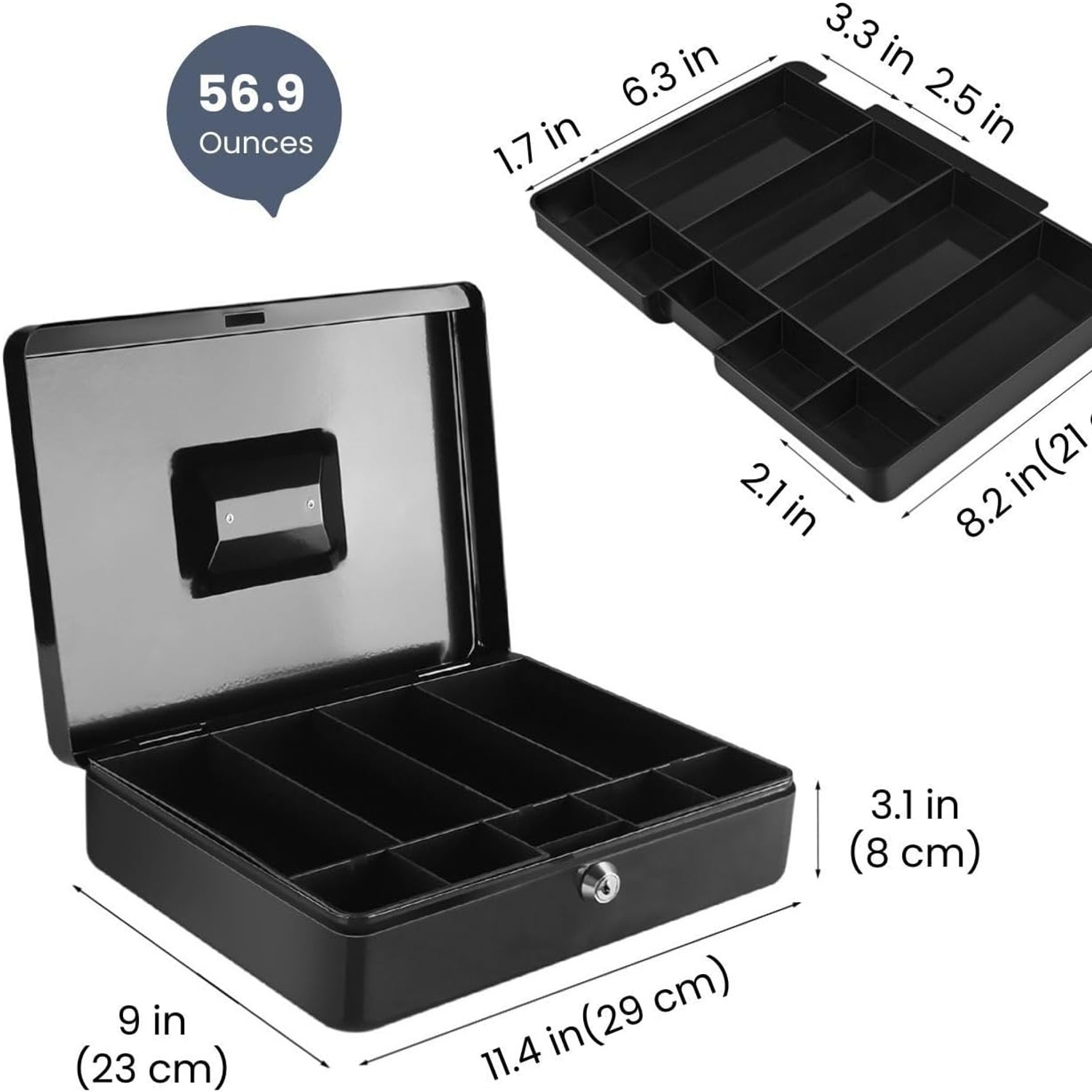
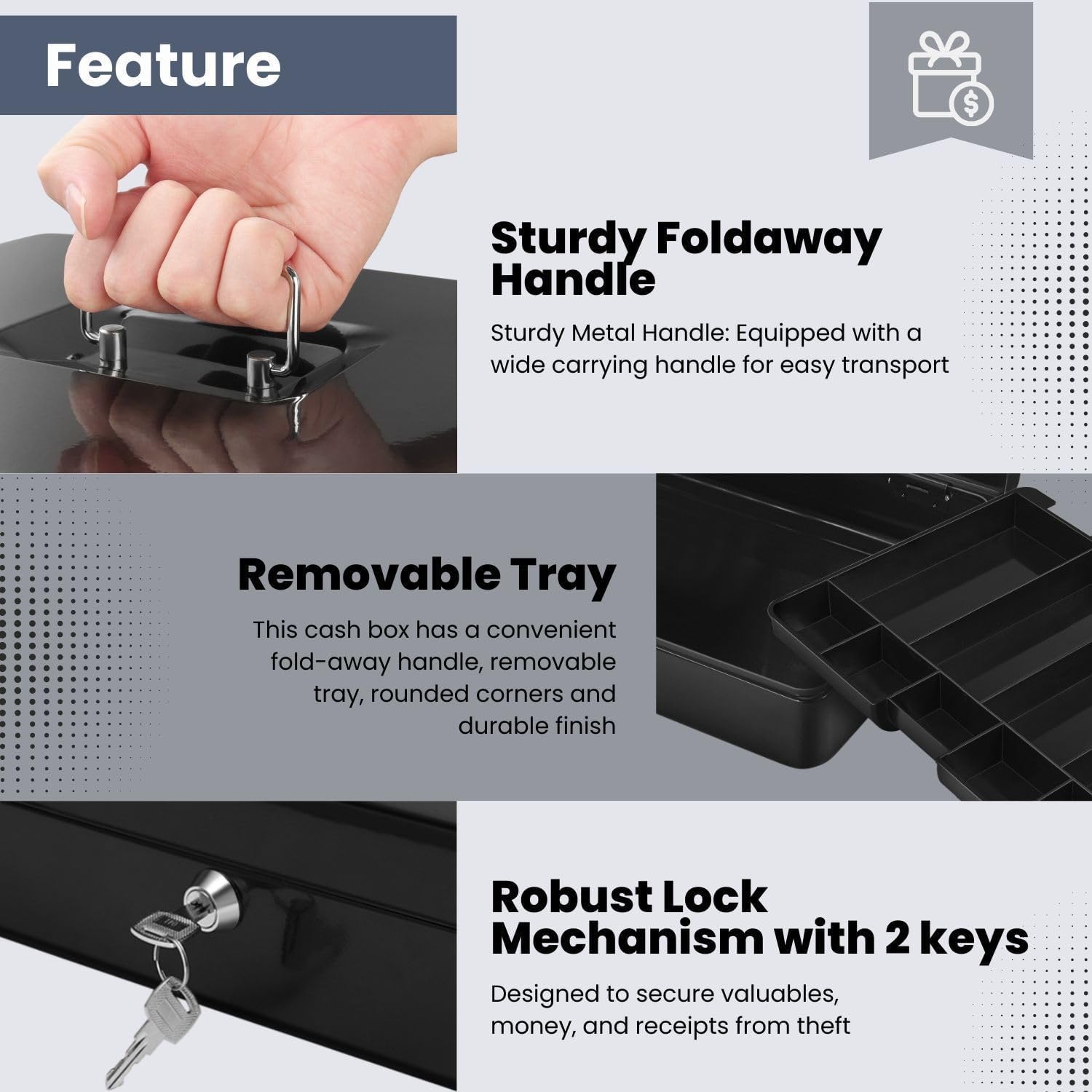
This locking cash box combines a nine-compartment tray with a keyed lock and folding handle. It is designed for portable, everyday cash organization. Before buying, it helps to look beyond the lock and think about your work surface, your cash routine and where the box will stay after use.
What a cash box can help you do
A cash organizer box works best when each part has a clear job. You might separate coins by value, keep bills together and give payment slips a set place. The exact arrangement depends on the tray layout and the money you handle.
That order can make counting easier. Instead of searching through a mixed pile, you return each item to its place as you work. At the end of a session, the same layout gives you a familiar starting point for checking the total.
The box is also a physical boundary between working cash and everything else on your desk. That is useful at home, at an event or beside a shop counter. It does not replace careful records, but it can support a more consistent routine.
How this model works
Access is controlled by a key-operated lock. A key is listed as an included component, though the number of supplied keys is not specified. There is no code to remember or keypad feature stated in the maker's description.
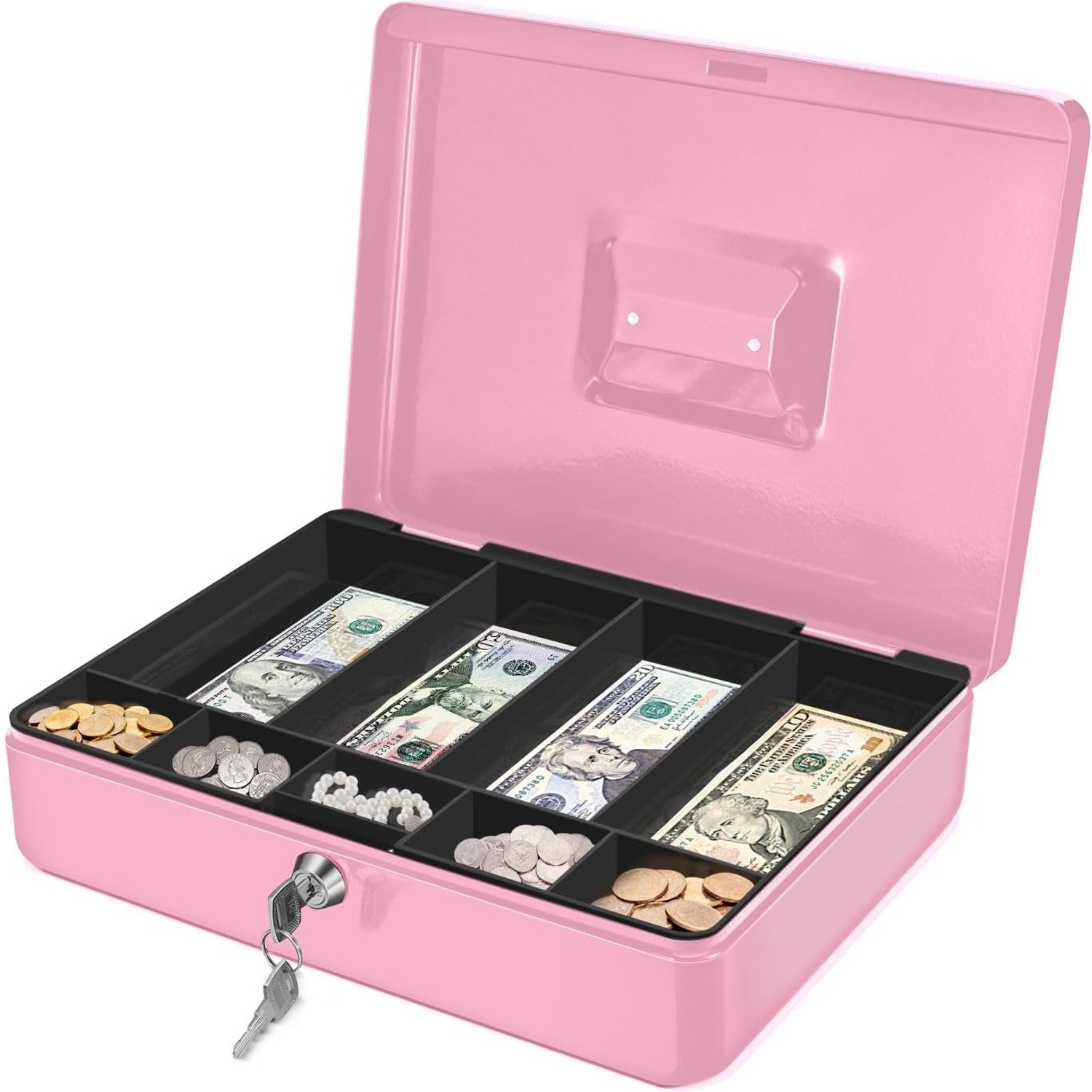
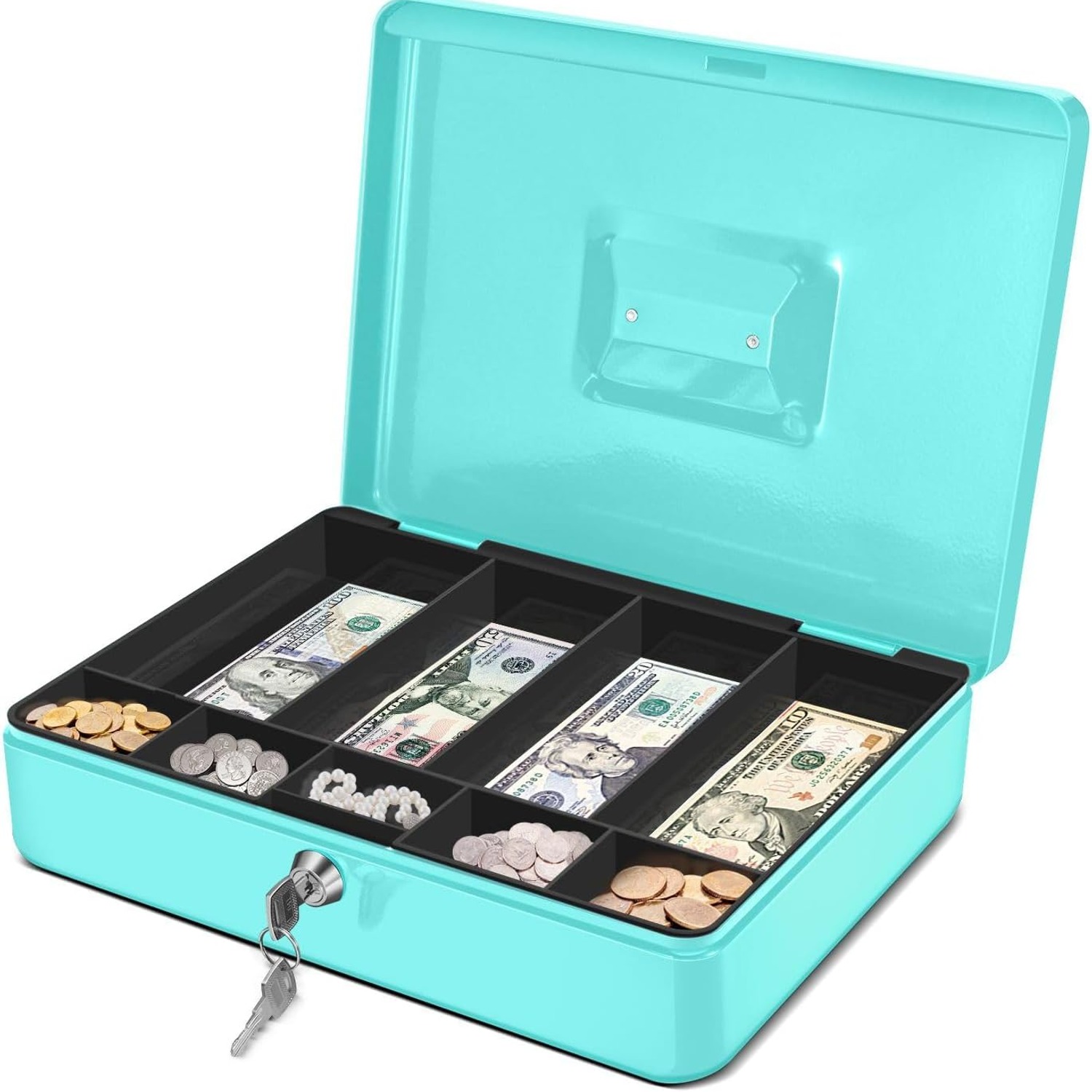
Inside, the tray is described as having nine compartments for organising cash and other small items. Individual compartment sizes are not given by the maker. The maker's description also does not confirm whether the tray lifts out or whether its dividers can move.
The box is freestanding, so its normal setup does not call for mounting. A folding handle allows you to carry it between locations. Close the lid and check the lock before lifting it, rather than trying to carry an open box full of loose change.
Check the size against your space
The listed overall dimensions are 12 inches wide, 9 inches deep and 3 inches high. Measure the place where you plan to use it, not just the shelf where you will store it.
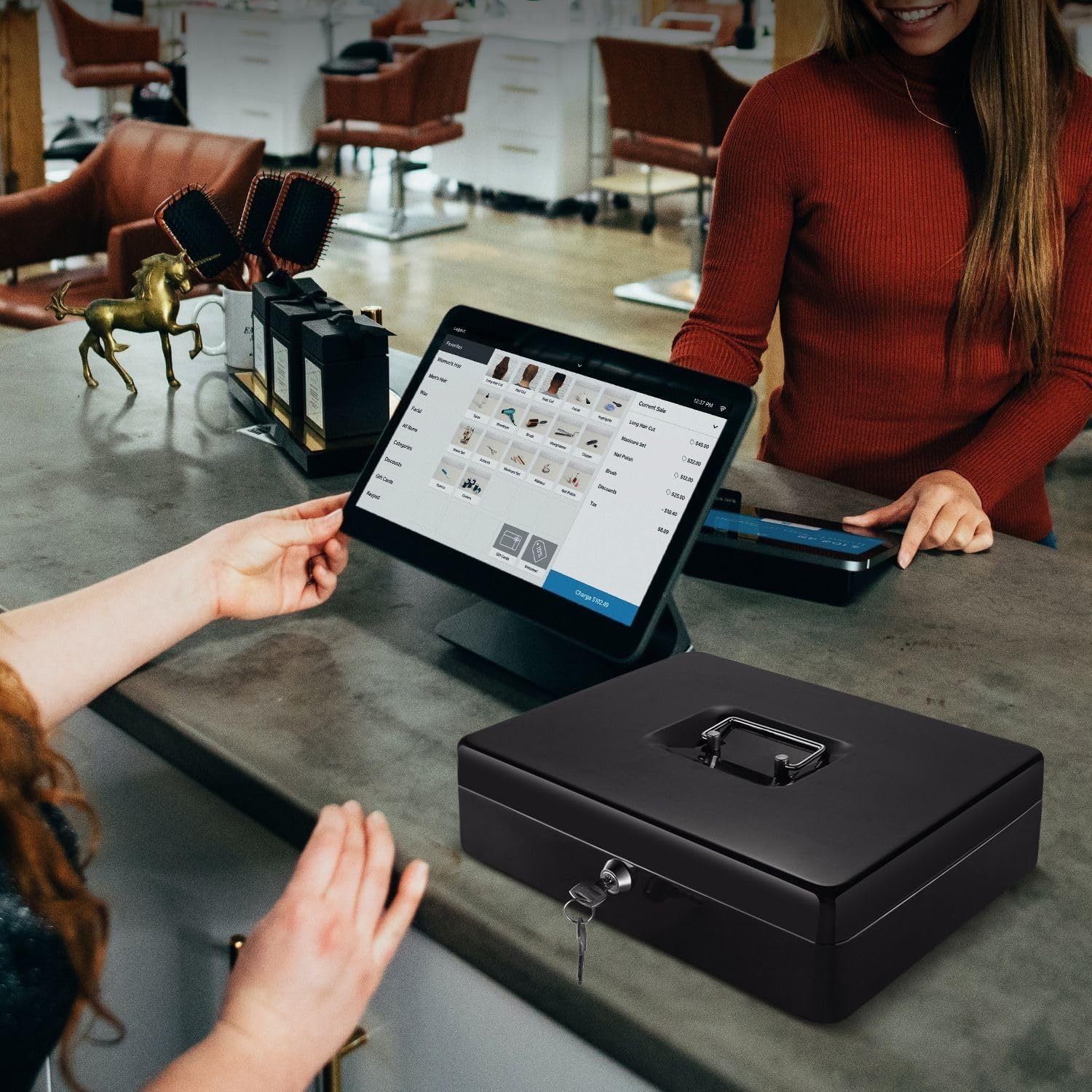
A counter needs room for the box and for the lid to open. You also need enough space to reach into it without leaning over stock, paperwork or a payment terminal. A crowded surface can make even a modest cash box awkward to use.
If you plan to place it in a drawer, check the drawer opening and usable internal space. Do not assume a fit based only on the outside dimensions of the furniture. Handles, runners and the lid opening may affect how practical the setup is.
The stated weight is 1.43 kg before your contents. Think about the full load if you will carry coins over a distance.
Think about what you need to sort
A nine-compartment tray sounds straightforward, but compartment count alone does not tell you how much it holds. A coin sorting cash box should match the mix of coins, notes and paperwork you actually use.
Start with a typical session. How many coin values do you need ready? Will you accept checks? Do you need somewhere for receipts, or will those go in a separate folder? Thinking through those questions is more useful than guessing from a product photo.
No cash capacity is specified for this model. There is also no confirmation that every banknote size fits flat in a particular section. If that matters to your setup, ask for compartment measurements before ordering. Avoid planning around storage beneath the tray, since that space is not confirmed.
Where it may fit into your routine
As a small business cash box, this model offers a place to keep a working float together. It may suit a staffed counter where cash is handled at intervals rather than through a full cash register.
For events, the folding handle makes it practical to move between a storage area and a table. A cash box for school fairs can also help keep the starting float separate from personal money. Agree on who holds the key before the event begins.
At home, the same format can hold cash set aside for small expenses. It may be easier to track household money when it has a dedicated container rather than several envelopes spread through drawers.
In each setting, the useful feature is the routine around the box. Decide where it belongs, who opens it and when you count the contents.
Understand what the lock does not promise
A key lock helps control ordinary access to a closed box. It does not, by itself, establish a tested level of protection against theft. The maker gives no burglary rating, insurance approval or security certification.
The product details list alloy steel construction, but do not state a steel thickness. Material alone is not enough to judge resistance to forced entry. Avoid choosing any portable cash box as a substitute for a rated safe when your needs call for one.
There is no stated fire rating either. Important documents and money that require fire protection need storage with suitable, documented performance.
Keep the box attended while trading. When you finish, remove it from public view and follow the storage rules for your home, workplace or organization.
Plan for dry conditions
This box is listed as not water resistant. That matters if you are choosing a cash box for market stalls, outdoor fairs or a table near food and drinks.
A canopy can reduce direct rain exposure, but it does not make the box waterproof. Windblown rain, a leaking roof or a spilled drink can still reach it. Choose a dry position and keep liquids away from the cash-handling area.
Do not leave it in a damp shed or another place where moisture is common. If wet-weather use is a firm requirement, compare products with a clearly stated level of water protection instead.
The black finish may fit neatly into a counter setup, but appearance should come after these practical checks. Dry storage and sensible placement matter more than matching nearby equipment.
Build a simple cash-handling routine
Before a session, count your starting money and note the total separately. Place each type of cash in its chosen section, then use the same arrangement throughout the day.
For petty cash storage, pair the box with a written or digital log. Record money taken out and keep the related receipt. A lock can control access, but it cannot explain a missing entry in the accounts.
If several people use the box, set a clear handover process. Count together where practical and agree on who is responsible for the key. Avoid leaving the key beside the box when it is meant to be locked.
After use, count the remaining money away from public view. Keeping the routine calm and repeatable is often more helpful than adding extra steps that people forget.
Care for the box and key
Wipe the exterior with a soft cloth, then dry it after cleaning. Avoid soaking the box or allowing moisture to enter the lock. Check that small scraps of paper are not trapped along the closing edge.
Treat the lock gently. If the key will not turn, stop and check whether the lid is obstructed. Forcing the key can make a minor problem harder to resolve.
Keep track of every supplied key. The maker does not confirm replacement key availability, so ask about that before purchase if several people will need access. Do not assume an ordinary key-cutting service can provide a suitable replacement.
Check the handle and lid before carrying, especially when the contents include heavy coins.
What to confirm before ordering
First, compare the overall size with your intended work and storage areas. Then consider whether the nine-compartment format suits your usual cash mix. Ask for more detail if note fit or tray removal is important.
Next, decide whether keyed access matches your working habits. Someone must keep the key available during use and controlled afterward. A shared workplace needs a clear plan for that.
Finally, check our delivery and returns pages delivery information and returns policy. Knowing those details before ordering is especially helpful when buying for a scheduled event or as a gift.
The short version
This money box with key offers a divided tray, a folding handle and a freestanding alloy steel body for everyday cash organization. Its listed footprint is 12 by 9 inches, with a height of 3 inches.
Choose it for an orderly, attended cash setup in a dry place. Check fit, plan your key routine and keep its limits in mind. It is a practical organizer with a lock, not a product with stated fire, water or burglary protection.