
The complete guide
Choosing a Push Button Key Safe for Spare Key Access
A spare key only helps if the right person can reach it when needed. Leaving one loose outside offers little control over who finds it. Handing out extra copies can also become awkward when visitors, family members, or work arrangements change.
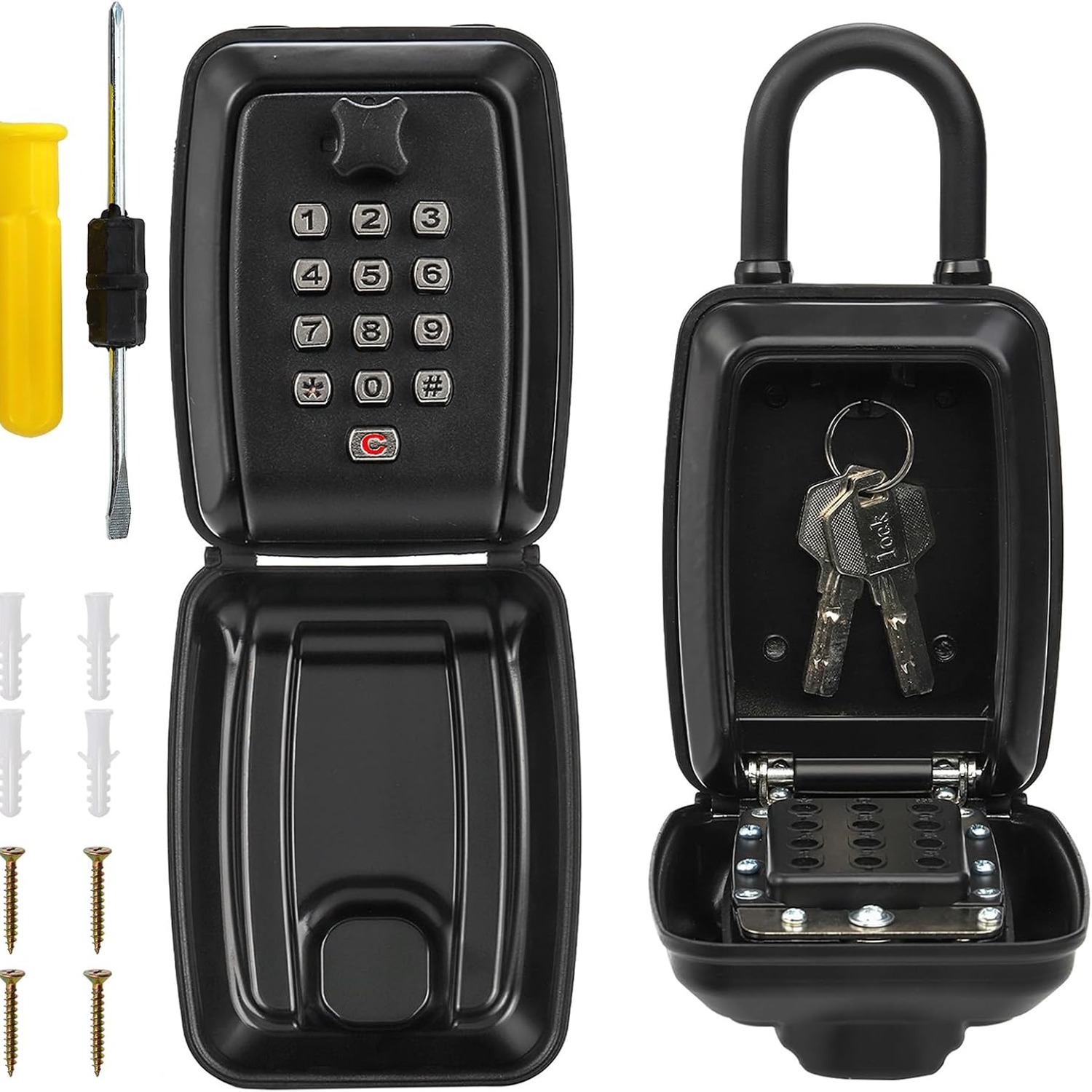
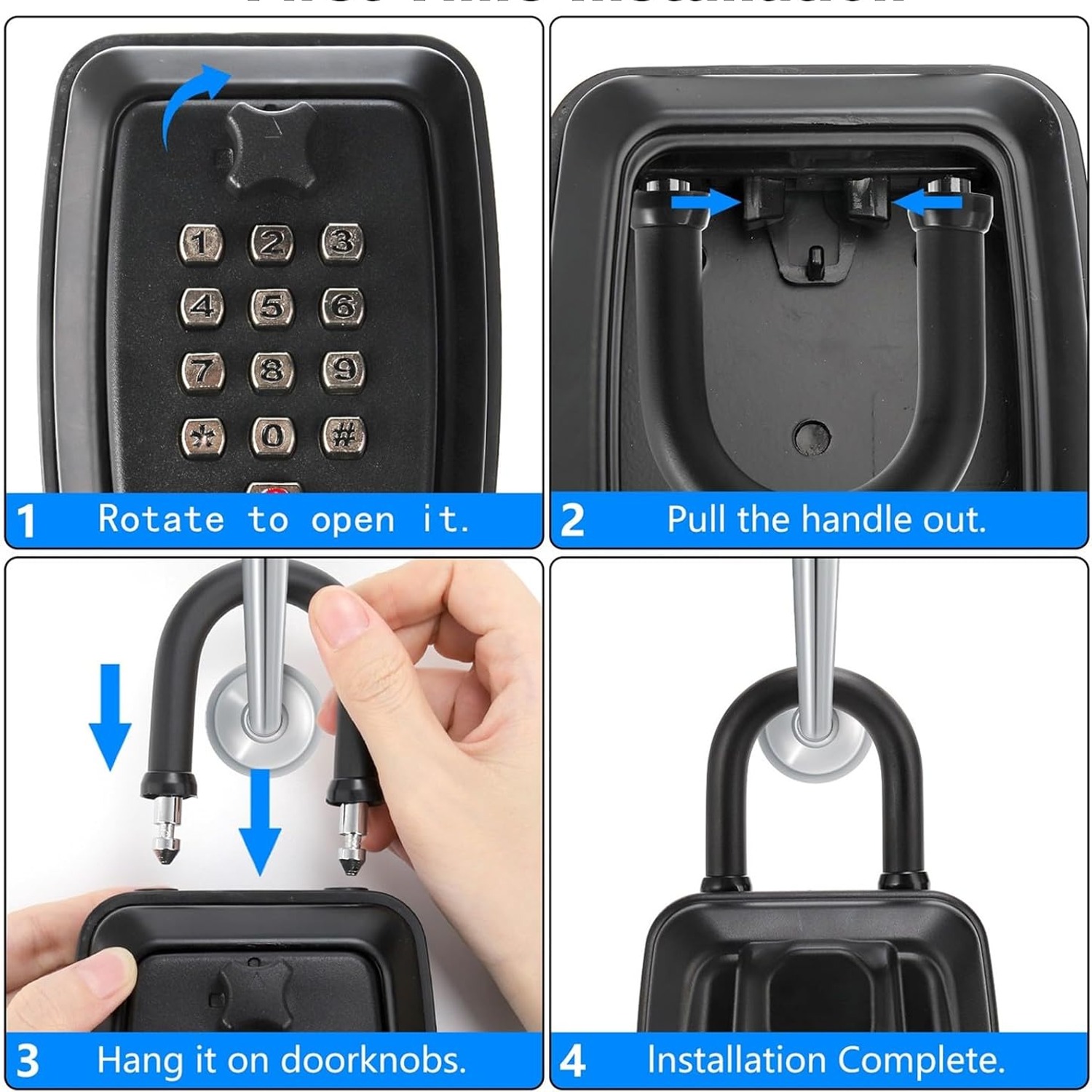
A push button key safe gives you a set place to store a key and a combination to share with chosen people. This model uses a removable shackle for hanging and has a hook inside for keys. Before buying, it is worth checking both the physical fit and the way its combination works.
Start with the access problem
Think about who needs the key and how often they will use it. A family member arriving home at a different time has different needs from someone visiting once. At an office, several people may need access, but that does not mean everyone should receive the same code indefinitely.
A spare key storage box can make these arrangements easier to manage. It does not decide who should have access or tell you when a key has been used. You still need a plan for sharing the combination, returning the key, and changing access when an arrangement ends.
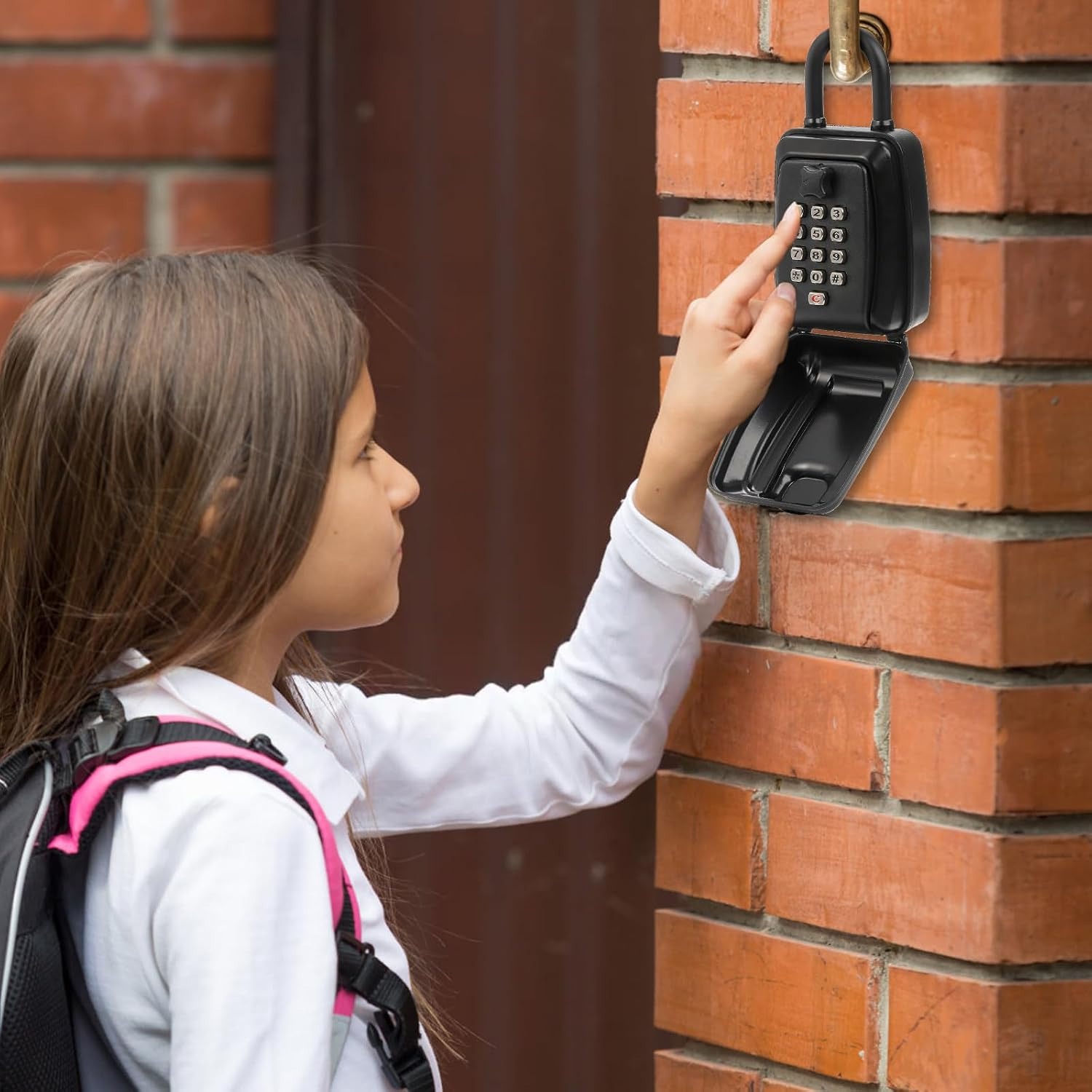
Choose the location with the user in mind as well. Someone should be able to reach the box, read the buttons, and operate the closure without standing in an unsafe position.
Understand the button mechanism
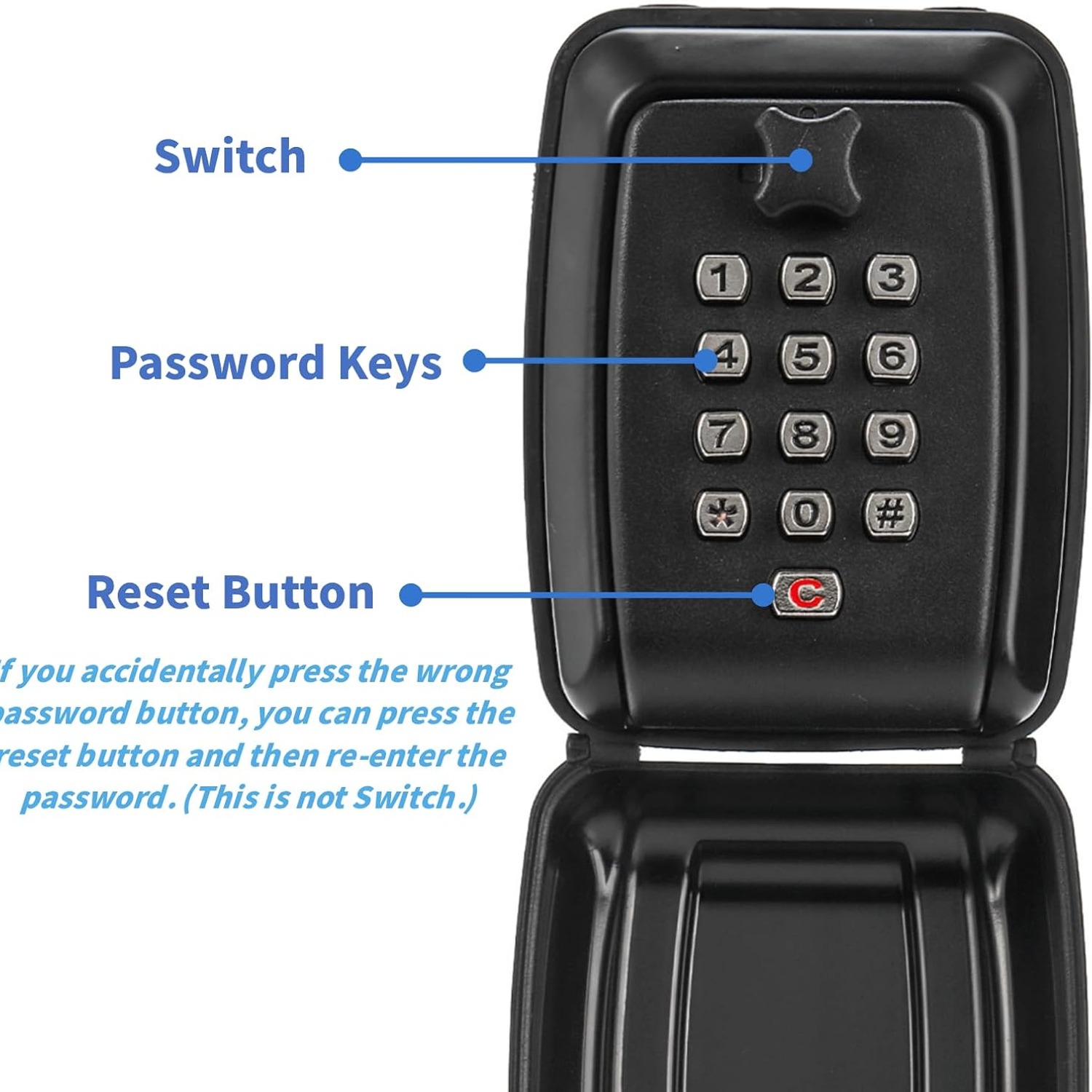
This push button combination lock box accepts a code using 4 to 8 digits. An important detail is that the selected digits can be pressed in any order. The lock is not described as requiring a fixed sequence.
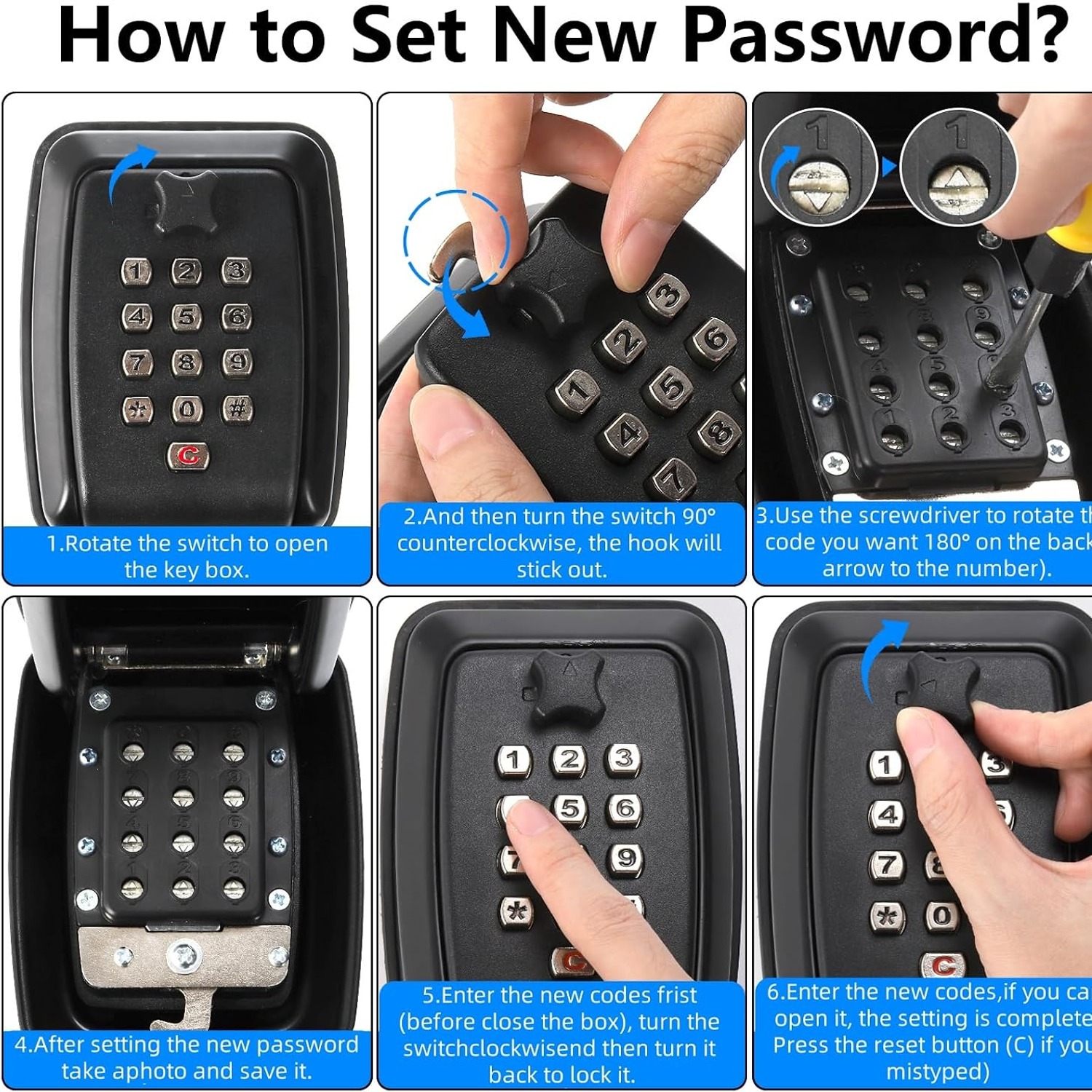
That changes how you should think about your code. Reordering the same selected digits does not create a new combination on this mechanism. If you need to change access, follow the supplied reset instructions rather than simply telling someone a new order.
The maker does not explain every setup step. Read the instructions that arrive with the box and test the lock before placing an essential key inside. Make sure every intended user understands how the buttons work, especially the order-independent entry.
Measure the keys, not just the box
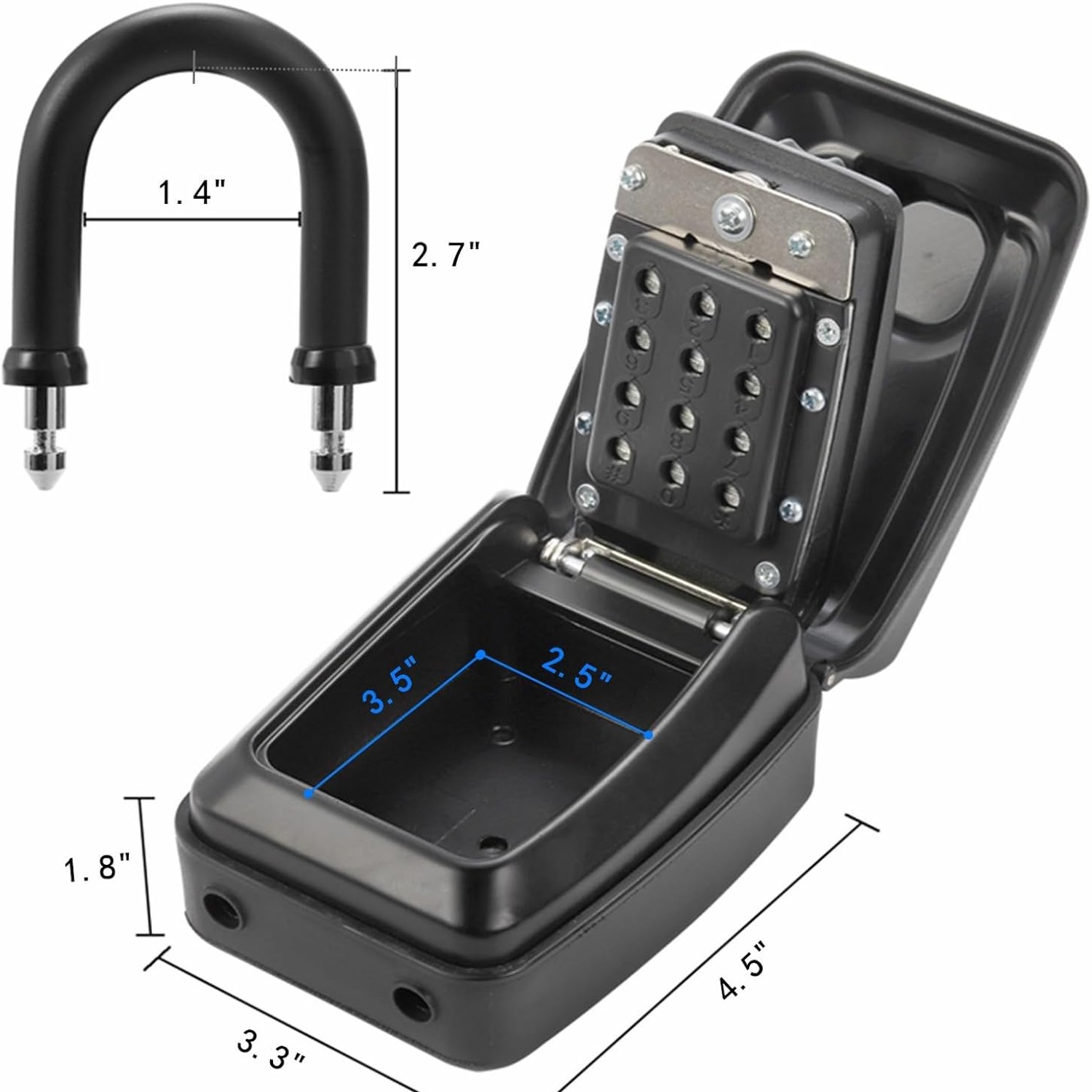
The item measures 4.5 × 3.3 × 1.8 inches. Those measurements help you judge the space the box will occupy, but they do not tell you how much room is available inside.
A key with a small head takes up less room than a large key ring with tags. A car fob may need more depth than a flat house key. Internal compartment dimensions and a stated key capacity are not provided, so avoid judging fit from the phrase “large key safe” alone.
If you plan to store more than one key, consider the whole bundle. Rings and clips can catch near a closure even when the key blades fit. Ask for internal measurements if your intended contents are bulky or unusually shaped.
Check the hanging point
The removable shackle makes this a hanging key safe rather than a box limited to one fixed position. The supplied description mentions attachment to suitable door handles and fences. It also lists a detachable hook and locking buckle among the included parts.
That does not mean every handle or rail will fit. Shackle clearance and diameter are not specified. Compare your intended attachment point with confirmed measurements before buying if the space is tight.
The support matters as much as the box. Check that the attachment point is sound and that the hanging box will not block a latch, rub against a moving door, or get trapped as a gate swings shut. The listed box weight is 0.68 kg before adding keys.
Choose a sensible outdoor position
The maker describes the product as waterproof and includes a cover intended to shield the keypad from dirt and weather. However, it does not provide a water-resistance test rating or an immersion limit.
For an outdoor key storage box, a sheltered position is the cautious choice. Avoid treating the wording as permission to submerge it or leave it where water collects. Keep the cover closed between uses and check the box after harsh weather.
Placement also affects ease of use. A spot that is simple to reach in daylight may be harder to use in rain or low light. Think about where the user will stand and whether they can open the box without dropping the key into gravel, drains, or dense plants.
Know what the construction tells you
The product details list a black, rectangular aluminum body. The reference description calls the material aluminum alloy, but no alloy grade or wall thickness is given.
Those facts describe the product, not a measured level of attack resistance. No burglary rating, fire rating, or security certification is supplied in the maker's description. There is also no stated insurance approval.
A covered keypad key safe can be a useful part of a key-sharing routine, but it should not be treated as a rated safe for valuables. If your property manager, insurer, or workplace requires a particular security standard, confirm that requirement first. Do not assume this box meets it.
Match it to the setting
For a house, the main benefit may be fewer key handovers. A house key lock box gives chosen users a shared pickup point, provided the code stays private and the key is put back after use.
For an apartment, permission may be the first issue to settle. A hallway railing, shared entrance, or outside door can fall under building rules. Check before hanging an apartment key safe where it may affect shared space.
Garages, dorms, offices, gardens, and retail stores are also listed uses. Each setting needs its own fit check. A garage position should stay clear of moving doors and vehicles. An office location should support a clear access policy rather than leave staff guessing about who holds the code.
Plan how the code will be shared
The box can hold the key, but the combination needs separate care. Share it privately with people who need access. Avoid leaving a readable code note beside the box or in another easy-to-find place.
Keep your own record somewhere secure. The maker's details warns about forgetting the combination, and no recovery or override process is given by the maker. Do not rely on being able to regain access through an unstated backup method.
When a visitor no longer needs entry, review whether the code should change. This is especially important if several people have received it over time. A simple access routine is easier to maintain than trying to remember every past conversation.
Use the internal hook well
The key hook gives you a set place to put keys inside the compartment. That can make retrieval less awkward than searching for a loose key at the bottom of the box.
Keep the stored set as small as your task allows. Extra tags, decorative rings, and unrelated keys can use space without helping the person who needs entry. Do not force the closure around a crowded bundle.
Agree on what happens after someone uses the key. For shared access, returning it promptly may matter more than the initial handover. Everyone who uses the box should understand whether the key stays there or is meant to be taken away.
Set up and test before relying on it
Allow time for a first check rather than setting up in a rush as someone waits outside. Inspect the supplied parts, read the instructions, and choose the code before putting the box into daily use.
Test opening and closing while access to the compartment is still available. Then check the hanging arrangement and protective cover. If another person will use it, have them try the process while you are present.
Keep an alternative entry plan during setup. This is sensible whenever you introduce a new lock or access routine. Resolve stiff operation, poor fit, or unclear instructions before relying on the box for an essential key.
Keep care simple and regular
Wipe the outside with a soft cloth and dry it after cleaning. Keep dirt away from the buttons and closing surfaces, and follow any care directions supplied with the product.
Check the shackle and attachment point from time to time. Look for wear, damage, or anything that stops the box from closing normally. If operation changes, investigate before leaving a needed key inside again.
A portable key lock box may move between locations, but each move deserves a fresh check. A good fit on one handle says little about the next one. Recheck clearance and make sure the box cannot interfere with everyday movement.
The short version
This key safe suits buyers looking for portable spare key storage with push button access, a removable shackle, and an internal hook. Its 4-to-8-digit mechanism accepts the selected digits in any order.
Before choosing it, confirm key capacity and hanging fit. Allow for sheltered placement, keep the code private, and test the lock before use. If you need certified security, a stated weather rating, or exact internal measurements, ask for that information rather than assuming it is included.