
The complete guide
Choosing a Home Safe for Everyday Valuables
Give everyday valuables a clear home
Passports in one drawer, cash in another, jewelry tucked behind a box. It is easy for small but important belongings to end up scattered around the house. A home safe gives them a defined storage place and adds a lock between those items and anyone who should not have access.
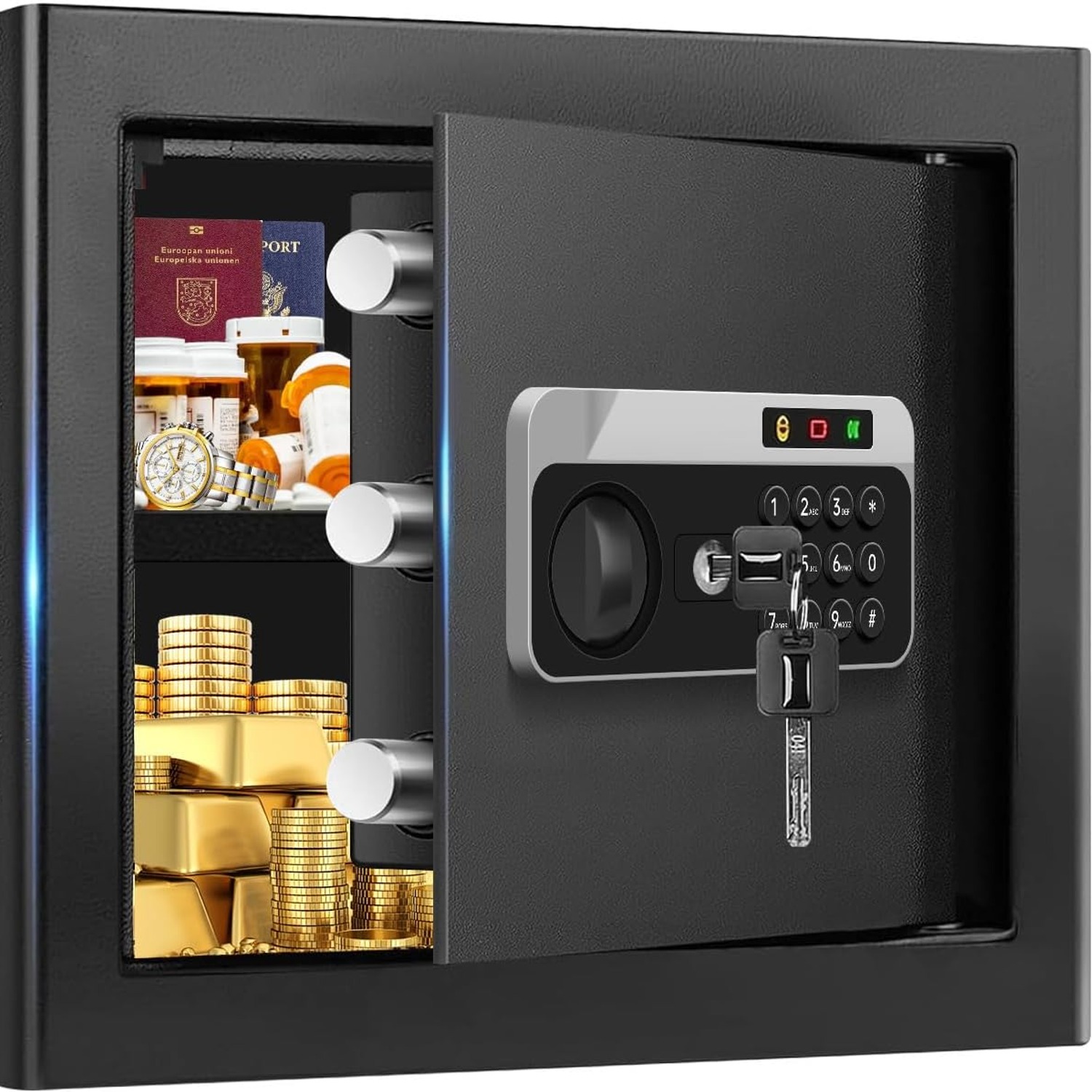
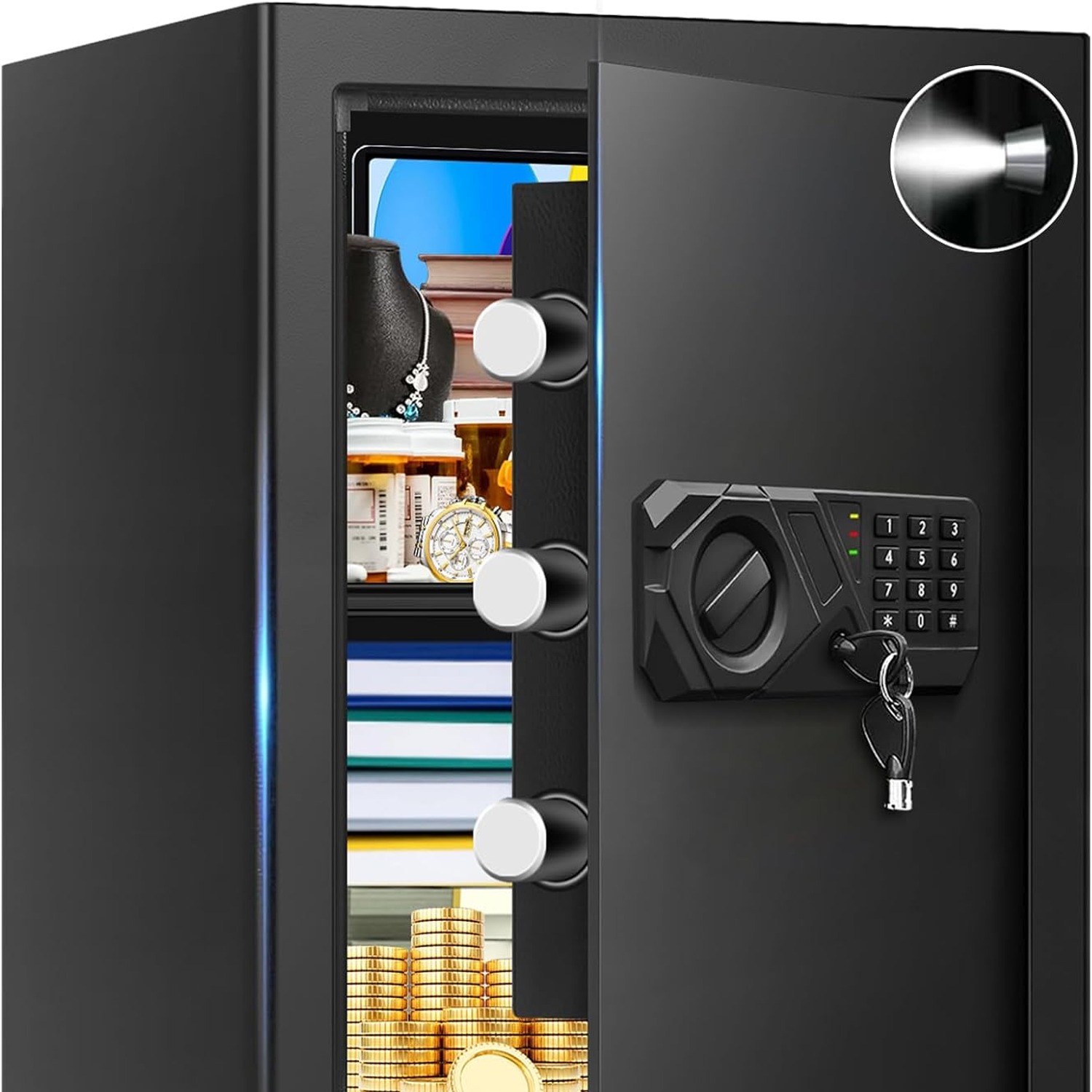
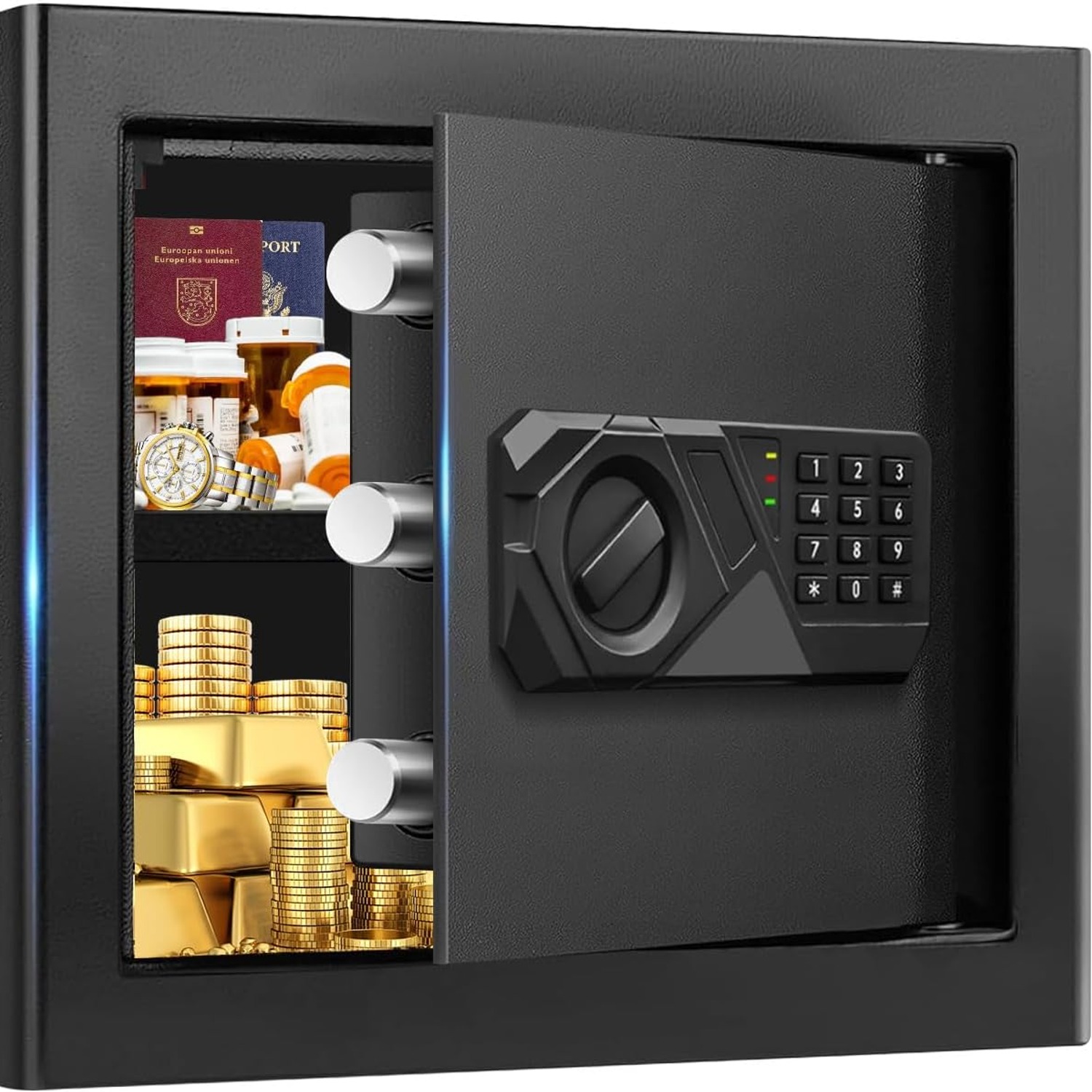
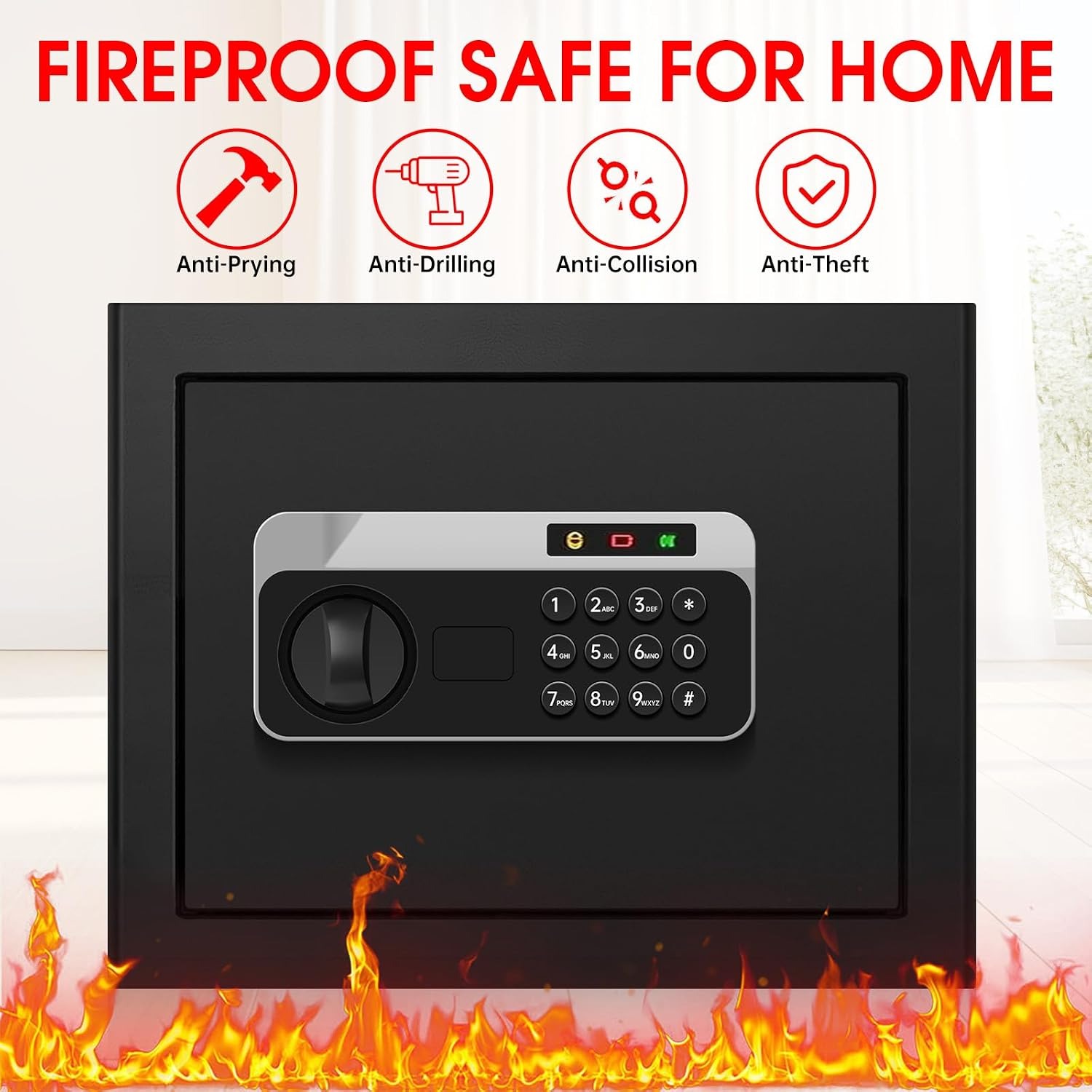
This large home safe combines an electronic keypad with spare-key access. It also lists a removable shelf, an interior light, and mounting options for a wall or floor. Those features are useful to compare, but the first buying question is simpler. Will it hold what you need, in the place you want to put it?
There is an important detail to settle before ordering. The supplied capacity and size figures do not all agree. Treat those differences as a reason to ask for confirmation, especially if you have a tight space or a particular item in mind.
Start with your belongings, not the capacity label
Put together the items you expect to store. Include their cases, envelopes, or folders rather than measuring only the bare objects. A passport may be small, but a travel wallet holding several passports can take up much more room.
Think about how you will reach things, too. A cash storage safe can become awkward if the item you use most is buried beneath several boxes. Leave some room for your hand and for moving items without emptying the whole interior.
The removable shelf gives you a choice of layout. You can separate smaller belongings or remove the shelf for taller objects. The maker does not give the shelf dimensions or its load limit, so avoid making assumptions about heavy items or a precise arrangement.
Resolve the size differences before buying
The heading includes “34 Liter Safe,” while the specification table lists 1.8 cubic feet. The reference text contains further capacity figures. These are conflicting descriptions, not interchangeable ways to state the same confirmed capacity.
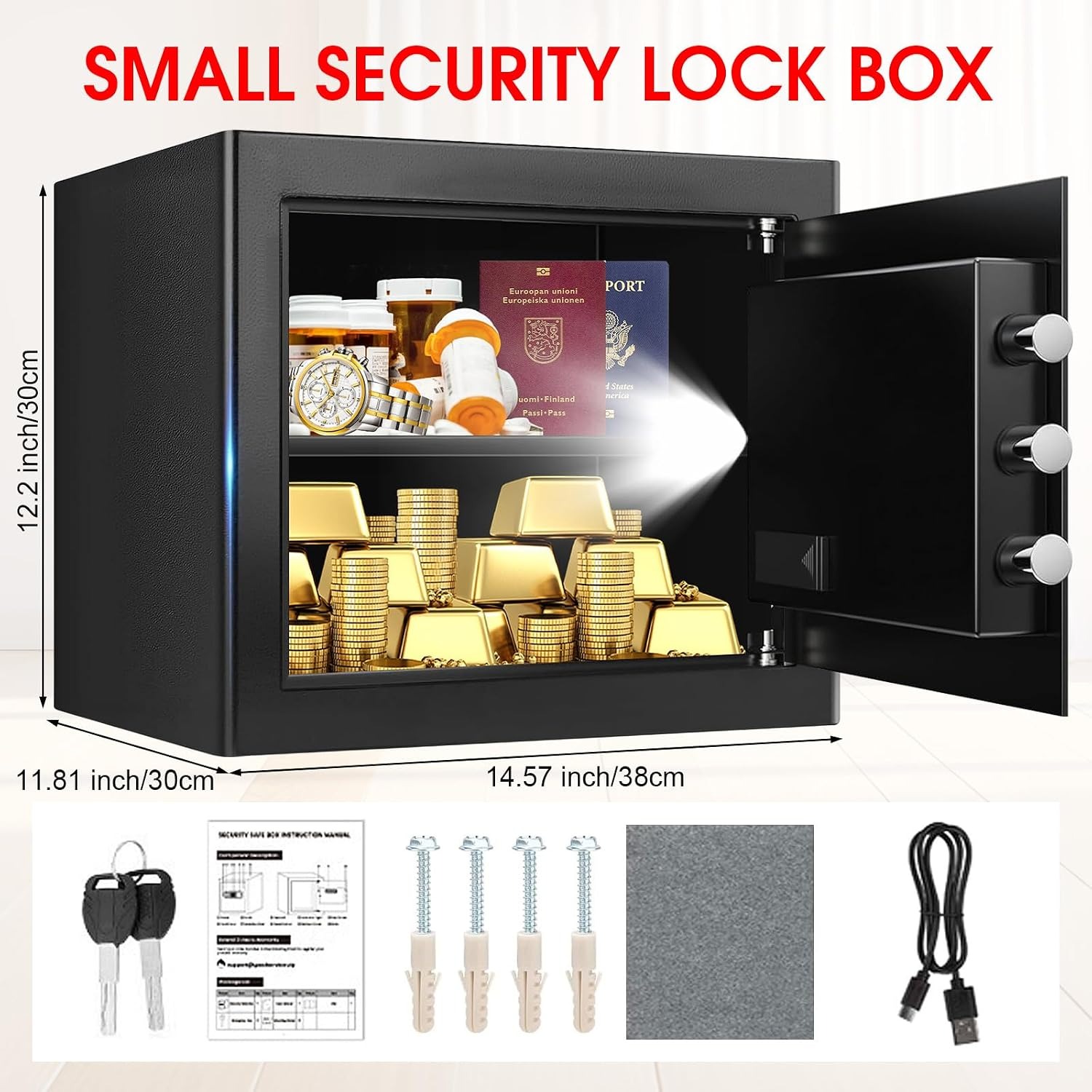
The detailed dimensions are listed as 11.81 inches deep, 14.96 inches wide, and 12.2 inches high. Another section gives a different width. Usable interior dimensions are not stated.
If you are fitting the safe inside furniture, ask for confirmed exterior measurements and the clearance needed to open the door. If you are buying a personal document safe, ask for interior measurements as well. Neither a capacity label nor an exterior width proves that a particular folder will lie flat inside.
This check matters more than whether the product is called large or compact. Those words are relative. Your storage space and the size of your belongings provide a much better test.
Choose an access method you can manage
An electronic home safe lets you use a code for routine access. That can be convenient when you do not want to carry a key each time you open it. The maker also includes two spare keys as an alternative opening method.
Keep those keys somewhere secure outside the safe. A backup key cannot help you if it is locked behind the same door you need to open. Consider who should know where it is and who should know the code.
Read the manual before setting up the keypad, then test access with the door open where the instructions allow. Battery type, quantity, and replacement details are not specified by the maker. Confirm those points rather than buying batteries based on a similar-looking keypad security safe.
Understand the alarm and lockout features
The listed features include a vibration alarm and incorrect-code lockout. The maker describes a 20-second lockout after three consecutive incorrect codes and a five-minute lockout after six failed attempts.
These features are worth understanding before daily use. Someone repeatedly guessing a forgotten code could trigger a delay. Make sure authorized users know the correct opening process and what to do if the keypad will not accept another attempt.
The maker also describes a silent mode that disables alarms. Check the manual for exactly what changes when that mode is enabled. Quiet operation may suit some households, but it is important to understand the effect on audible alerts rather than treating it as a simple volume setting.
Plan where the safe will stay
This model supports wall or floor mounting. The maker describes mounting holes at the back and bottom, and four expansion screws are included.
Choose the location before drilling. Check that the door can open, that you can see the keypad, and that the safe will not block access to nearby drawers or shelves. A hidden position is not helpful if it makes ordinary use difficult.
The listed weight is 10.98 kg before you add belongings. Any shelf, cabinet base, or other support needs to suit the total load. The supplied screws also should not be assumed suitable for every surface.
For either a wall mount safe or floor mount safe installation, follow the manual and check the structure behind the mounting point. If you are unsure about the surface, pipes, wiring, or suitable fixings, get qualified installation advice.
Match security claims to your needs
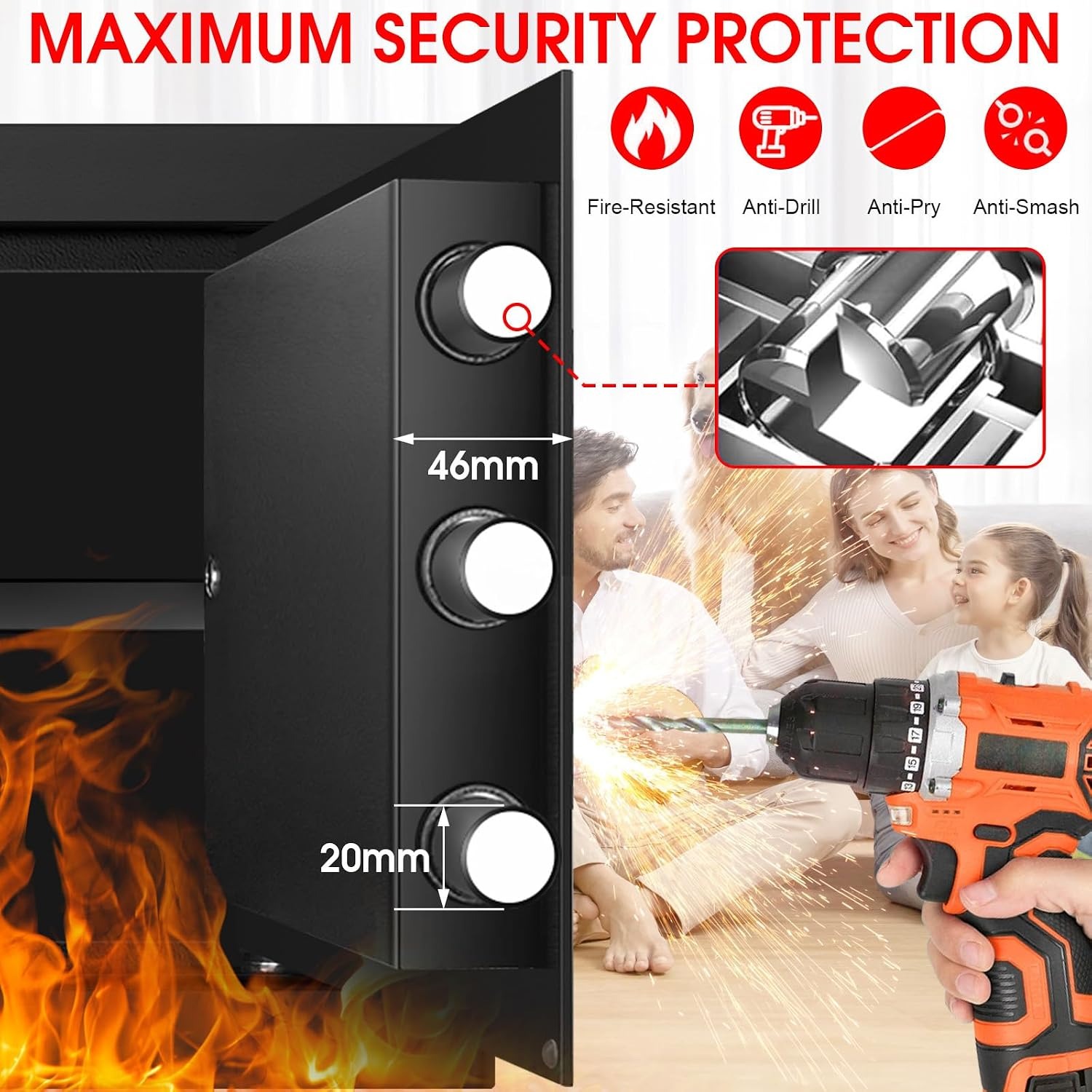
The maker lists alloy steel construction, a reinforced door, two 20 mm locking bolts, and tamper-resistant hinges. Those are construction details you can consider alongside the keypad, alarm, and mounting options.
They do not establish an independently tested burglary rating. No such rating is specified in the maker's description, and no insurance approval is provided.
If you need cover for a certain value of belongings, ask your insurer what it requires before choosing a steel home safe. There may be requirements for a tested standard, installation method, or approved location. A product description cannot replace those conditions.
The same care applies to legal storage duties. Do not assume that a general household safe meets rules for restricted items simply because the maker mentions them.
Do not confuse locked storage with fire protection
A locked box and a fire-rated safe serve different purposes. The maker does not specify a fire rating, a tested protection time, or a water-resistance rating.
That distinction matters if your main aim is protecting original records from a house fire or flood. A personal document safe may organize papers and control access without providing verified heat or water protection.
Decide which risk you are trying to address. If fire protection is essential, look for a documented rating that covers the contents and conditions you care about. Do not infer that protection from steel construction or the size of the door.
Make the interior easy to use
The interior sensor light is a practical feature when the safe sits inside a cupboard or another dim space. It helps you see belongings without relying only on the room light.
Plan a simple layout from the start. Keep frequently used items easy to reach and use suitable pouches or boxes for small pieces. A jewelry storage safe is easier to live with when chains, earrings, and watches are not loose in one pile.
Check containers before buying them. The removable shelf offers flexibility, but the maker does not confirm the exact space above or below it. Keep contents clear of the door and locking area so nothing interferes with closing.
Set up a basic care routine
A safe should remain easy to open and close during normal use. Wipe surfaces with a soft, dry cloth, and keep liquids away from the keypad and lock openings.
Use the supplied manual for code changes, battery maintenance, and mounting checks. Avoid adding oil, cleaners, or other products to the lock unless the instructions specifically call for them.
Review access arrangements when your household changes. Consider who knows the code and where the spare keys are kept. Good habits matter alongside the hardware, particularly for a home safe with spare keys that may be used only rarely.
Check the purchase details
The listed box contents are the safe, two spare keys, four expansion screws, a mat, and a user manual. Batteries are not listed as included, and their requirements need confirmation.
The store states free delivery on United States orders.
Read the returns policy before ordering, especially while the dimensions remain uncertain. Warranty terms are also not specified by the maker. Asking these questions early is easier than finding out after delivery that the safe will not fit your space.
The short version
This safe offers keypad and key access, a removable shelf, an interior light, and wall or floor mounting options. Those features may suit everyday valuables storage.
Confirm capacity and measurements first. Then check installation, battery needs, and any security standard your situation requires. Choose it for documented features, not for protection claims that the maker does not provide.