
The complete guide
Choosing a Rolling File Box for Important Papers
Important papers often end up in several places. A tax folder lives beside the desk, certificates sit in a drawer, and the papers needed for an appointment disappear into a bag. Finding one document becomes a search through the house.
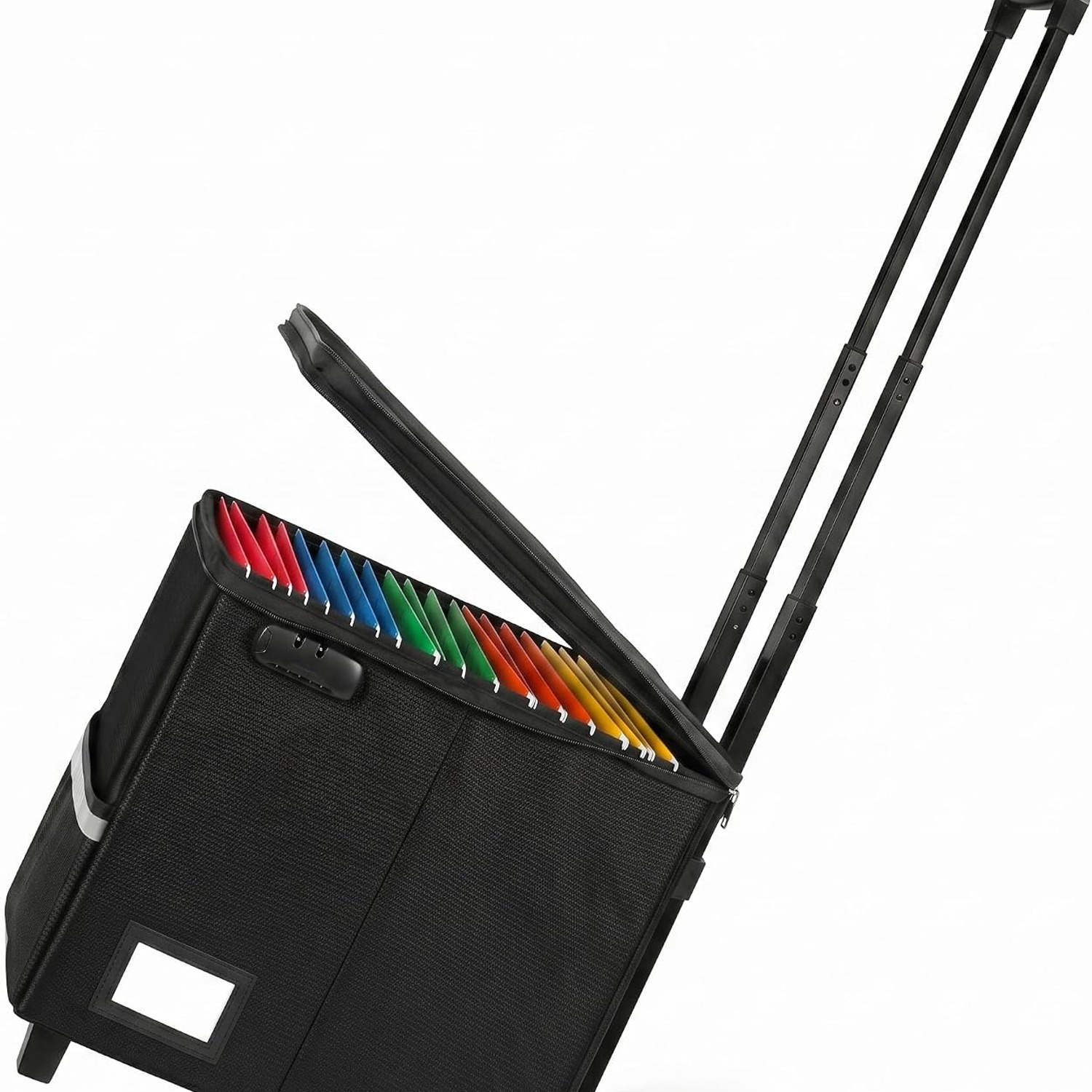
A rolling file box gives those papers a shared home while letting you move them to where you work. This model combines hanging folder storage with a telescopic handle, wheels, and a combination lock. It also folds away when empty.
The useful question is whether those features match your routine. Size, access, and the limits of its protective claims matter more than the product name alone.
What a rolling file box helps you do
A fixed filing cabinet makes sense when papers stay in one room. A rolling document organizer serves a different need. You might sort household bills at a table, work at a desk during the week, and put everything away before guests arrive.
Moving the storage box with the papers inside can reduce the need to shift loose folders between bags and drawers. Keeping a consistent filing order also makes it easier to return a document after using it.
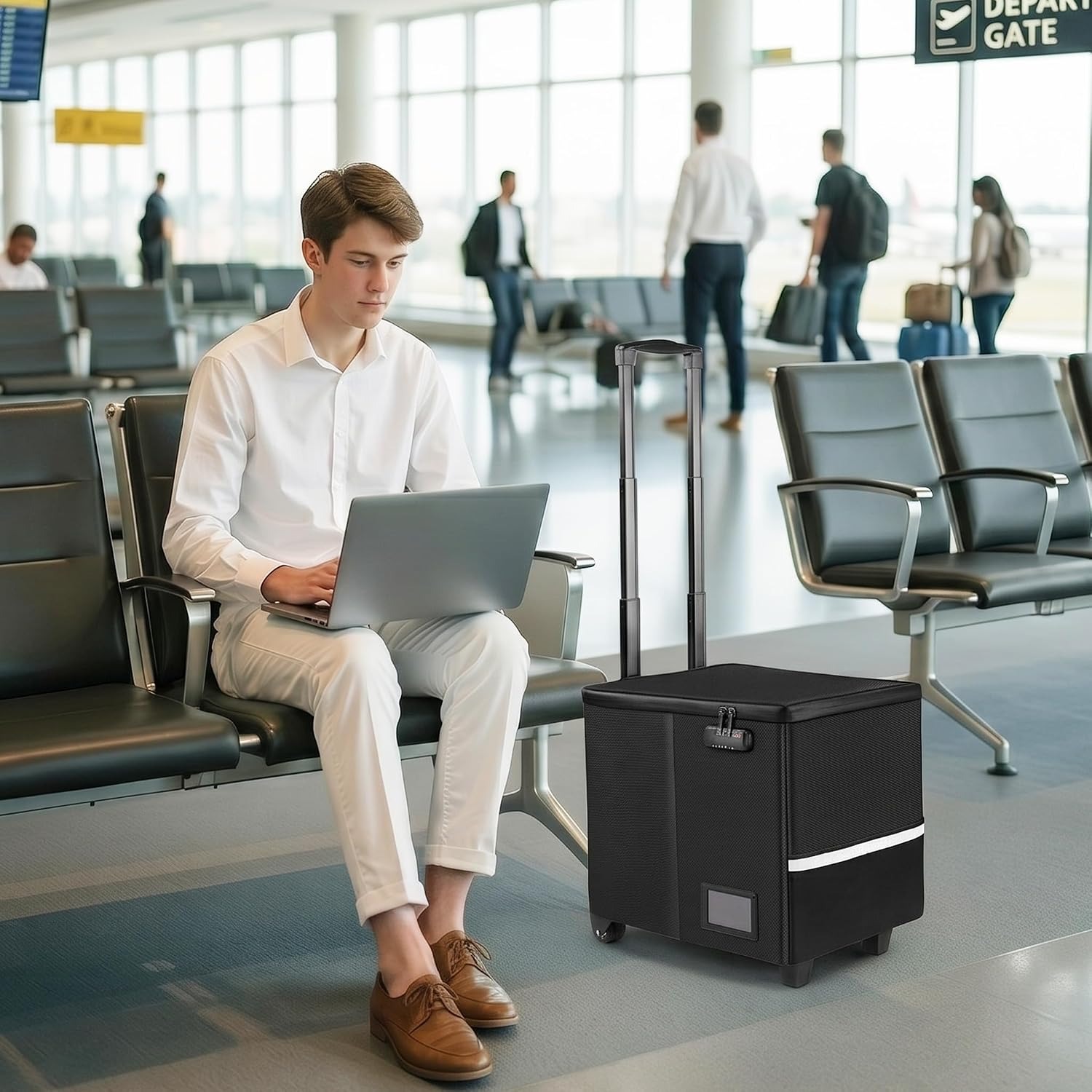
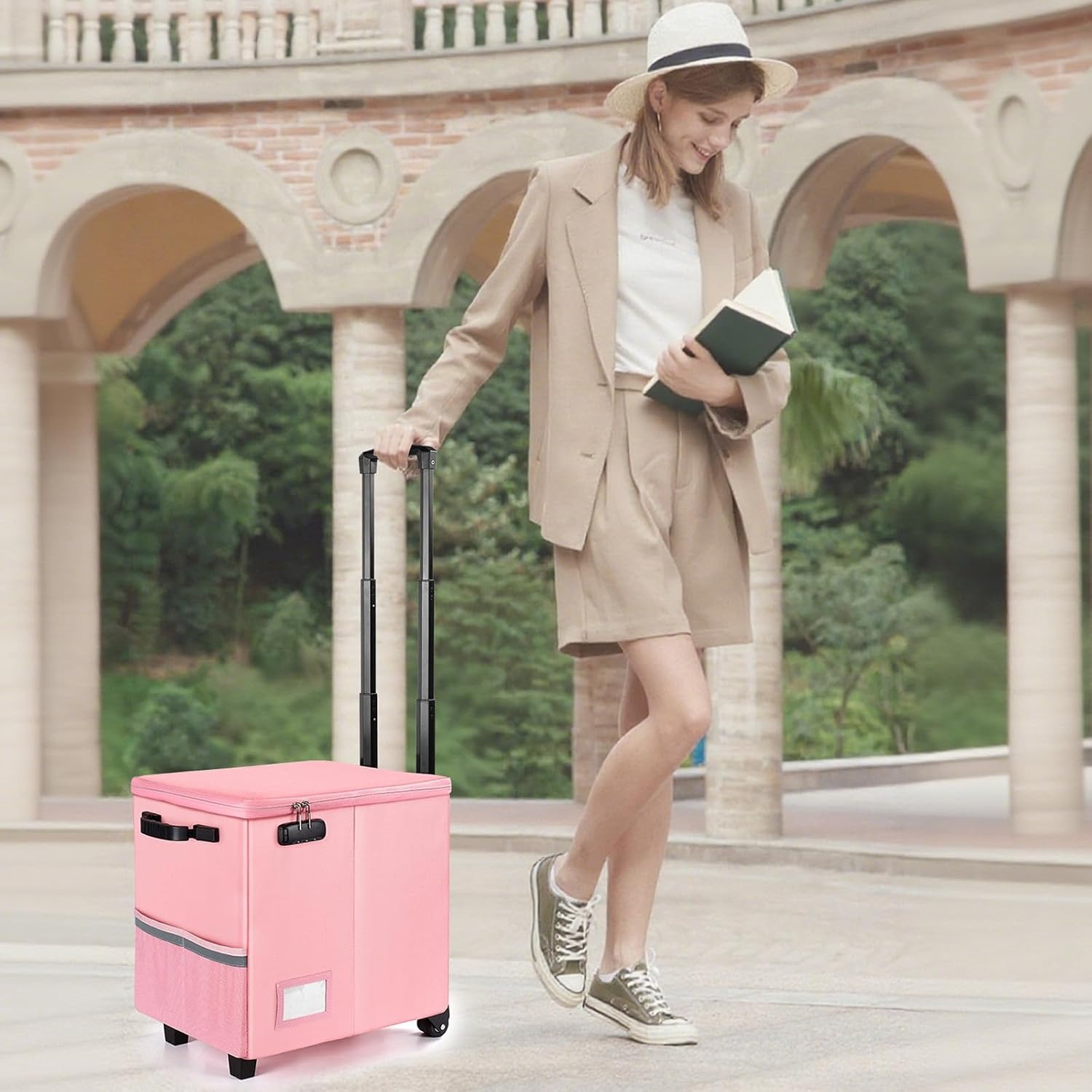
This box has a telescopic handle and 360-degree wheels. Those are useful features to consider if you often move records across a room. They do not remove the need to check doorways, floor changes, and the space where the box will sit.
Understand the protection claim first
The product is named a fireproof file box, and its listed materials include silicone-coated fiberglass. However, the maker's description does not provide an independently verified fire rating or a tested protection duration.
That distinction matters. A product name does not tell you how long stored papers would remain usable in a particular fire. It also does not establish the conditions under which a test was carried out.
If your decision depends on a rated level of fire protection, ask for the relevant test documentation before buying. Do not fill a gap in the information with an assumption.
Think of emergency document storage as one part of a wider plan. Copies kept elsewhere may still be needed. Never delay leaving a dangerous building to collect a file box, whether it has wheels or not.
Water resistant does not mean waterproof
The listed water resistance is another feature that needs a careful reading. This is a water resistant file box, not a product with a stated waterproof rating.
Do not assume it will protect papers during a flood, immersion, or prolonged exposure to water. The maker does not give a water-test depth, duration, or a rating for the complete closure.
Choose a dry storage location away from likely leaks. Make sure papers are dry before putting them away, too. A protective outer material cannot solve moisture already trapped among documents.
For irreplaceable originals, consider what backup copies you can keep separately. That is sensible even when using a storage product with more detailed test information.
Match the box to your folders
This model is described as fitting both letter and legal hanging folders. That makes it worth considering if you use either common format or need room for a mix of documents.
Folder size is only part of the fit, though. A few slim folders take up much less space than the same number filled with receipts, booklets, and thick records. The maker's description does not state a folder capacity.
Before choosing a hanging folder box, gather the files you actually intend to store. Measure the group without squeezing it tightly. Leave room to separate folders and read their labels.
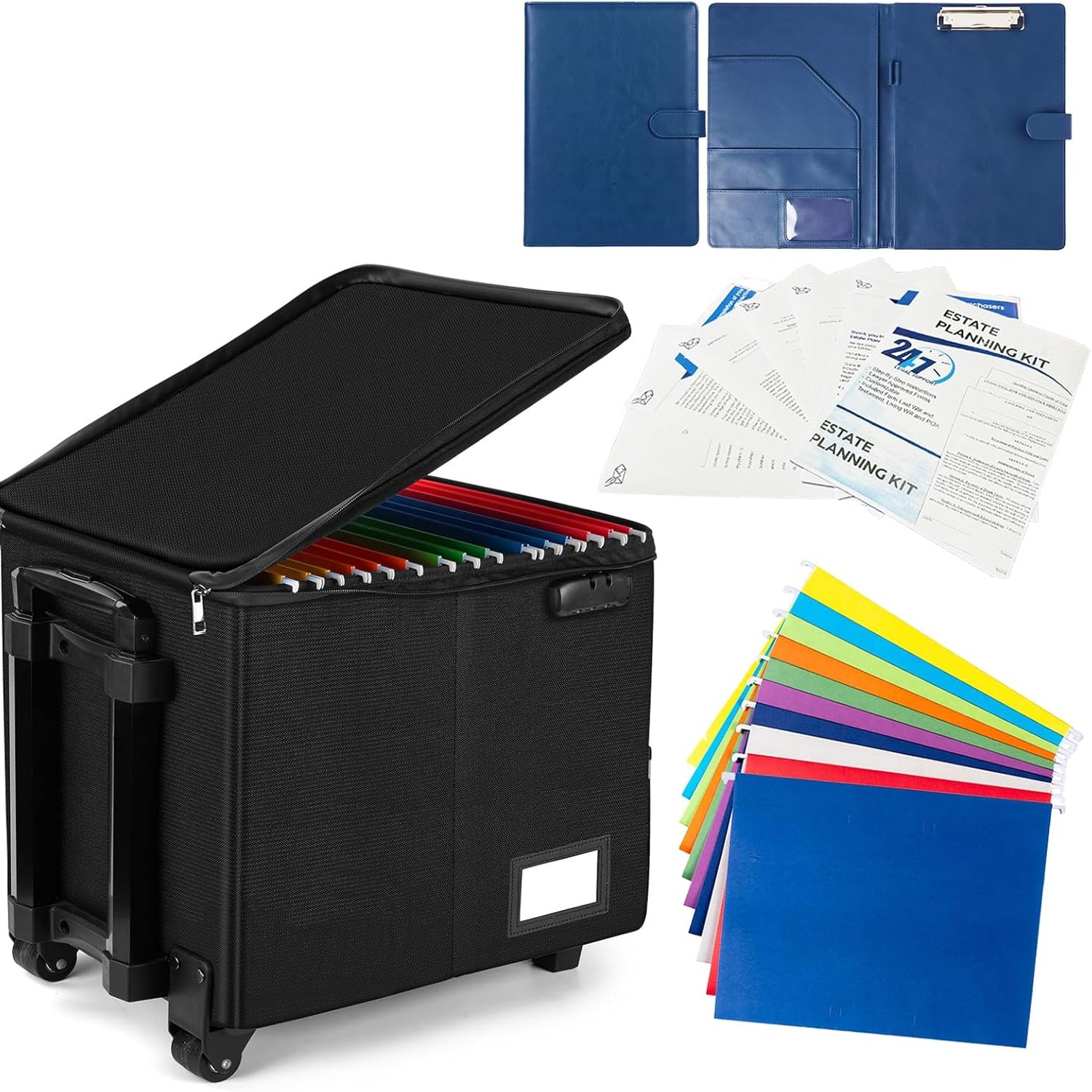
Hanging folders are not listed among the included components. Plan for those separately rather than assuming the box arrives ready to file every document.
Check the measurements before choosing a spot
The supplied dimensions read 13 inches long by 37 inches wide by 16.9 inches high. Those figures should be confirmed before you order for a fitted location, especially because usable interior measurements are not given.
Measure the intended storage spot as well as the route to it. A box may fit under a table yet be awkward to pull out past a chair. The lid also needs room to open.
If you plan to carry the box in a vehicle, check the opening and the available floor space. Do not judge fit from a photo alone.
The listed item weight is 10.5 ounces, while a separate field gives 0.3 kg. Neither figure tells you the safe loaded capacity. Ask for a load limit if you expect to store a substantial amount of paper or books.
Decide how much mobility you need
Wheels are most helpful when they match the route you use. Look at thresholds, rugs, and changes in floor height before deciding whether rolling office storage will make your day easier.
The maker does not specify wheel diameter, wheel brakes, or tested performance on carpet. Avoid assuming that 360-degree movement means the box will cross every surface without effort.
Stairs are a separate concern. A telescopic handle is listed for moving the box, but its presence does not establish that it is suitable for lifting a full load. Follow the supplied handling instructions.
For travel, secure the box against shifting. Its ability to roll is useful in an office, but uncontrolled movement inside a vehicle is something to prevent.
Use the lock for the right purpose
A combination lock adds a barrier to casual access. It may be useful when you do not want household members or visitors opening stored files without asking.
It is not evidence of burglary resistance. There is no burglary rating in the maker's details, and the box should not be treated as a tested security safe.
For workplace records, start with your organization's storage rules. A portable file organizer may help keep papers together while still falling short of a formal requirement for confidential storage.
Set the combination according to the supplied instructions. Check that you can open and close the lock before filling the box, and keep a secure record of the code somewhere separate.
Give small items their own place
The listed organizer pockets provide places for cards, pens, USB drives, and similar items. Using them can stop small objects from sinking between hanging files.
Keep the system simple. A clearly labeled folder for current paperwork and a separate place for completed records may be enough to start. Add more divisions only when they help you find things.
Avoid filling every pocket just because it is there. Bulky objects can make it harder to close the box and may press against papers. Pocket sizes are not provided, so check fit rather than forcing an item inside.
A short review every few months helps keep home office file storage useful. Remove papers you no longer need, following any legal or financial record-keeping requirements that apply to you.
Folding and everyday care
The collapsible design is useful when storage needs change. Empty the box before folding it, and follow the supplied instructions rather than forcing support panels into place.
Foldable file storage also needs a sensible routine when in use. Keep the box on a stable surface and avoid overfilling it. Although stackable is listed as a feature, no stacking limit is supplied.
For cleaning, start with a soft cloth. Let any damp areas dry before papers go back inside. Do not immerse the box or assume that water resistance makes washing it safe.
Check the zipper and wheels for debris. If either catches, stop and find the cause instead of pulling harder. Loose threads and paper scraps are easier to remove before they become tightly caught.
Who this design suits
This design is worth considering for someone who needs to move letter or legal files between nearby work areas. The folding feature may also suit a home office that shares space with other activities.
It is less straightforward for buyers who need a confirmed load capacity, precise internal dimensions, or documented fire protection. Those details need checking before purchase.
As a gift, it makes most sense when you know the recipient's filing habits. Ask about folder sizes and available space rather than guessing. A useful storage gift should fit their routine, not create another item they need to find room for.
The short version
This rolling file box combines letter and legal hanging folder compatibility, small-item pockets, a zipper, and a combination lock. Wheels and a telescopic handle support movement, while the empty box folds for storage.
Choose it for those stated features. Confirm the dimensions and load limit, and do not mistake fireproof wording or water resistance for a documented safe rating. A good filing setup starts with knowing both what the box offers and what still needs checking.